
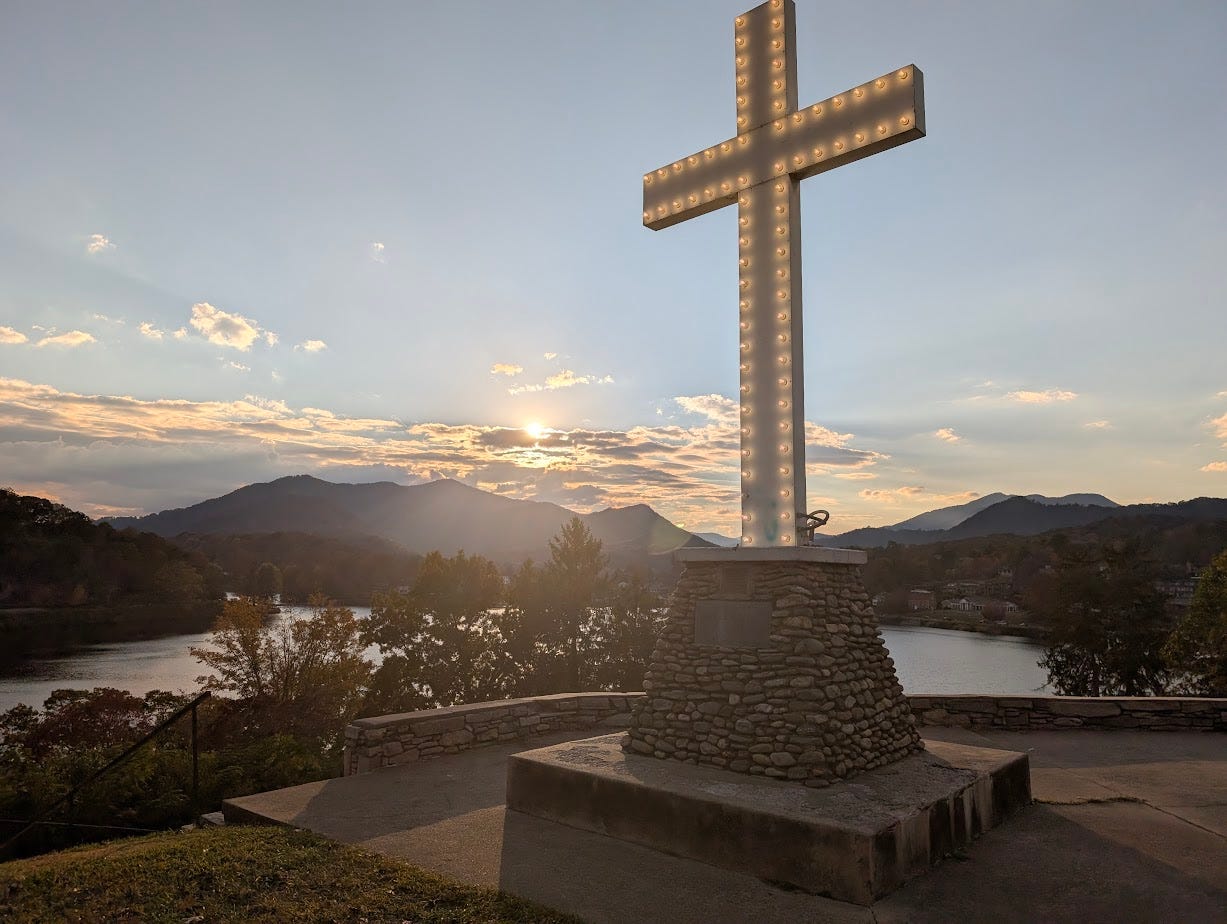
This past weekend I spent two, wonderful days at the gorgeous Lake Junaluska Retreat Center in the Blue Ridge Mountains of Western North Carolina. The occasion? An event called Southeastuary is a conference inspired by the Estuary Movement, started by California pastor Paul Vanderklay.
Without going into laborious detail, the Estuary movement finds its nucleus in the “Estuary Protocol,” which seeks to bring people together for deep, in-person conversations where everyone has a chance to speak and learn about their fellow man. Southeastuary featured a mix of conversations between selected speakers and several estuary breakout sessions, each with roughly eight people.
Without knowing what to expect, I had what some call “the Cadillac” estuary experience with my estuary group being a mix of estuary veterans and newbies. And I have to agree with the moniker.
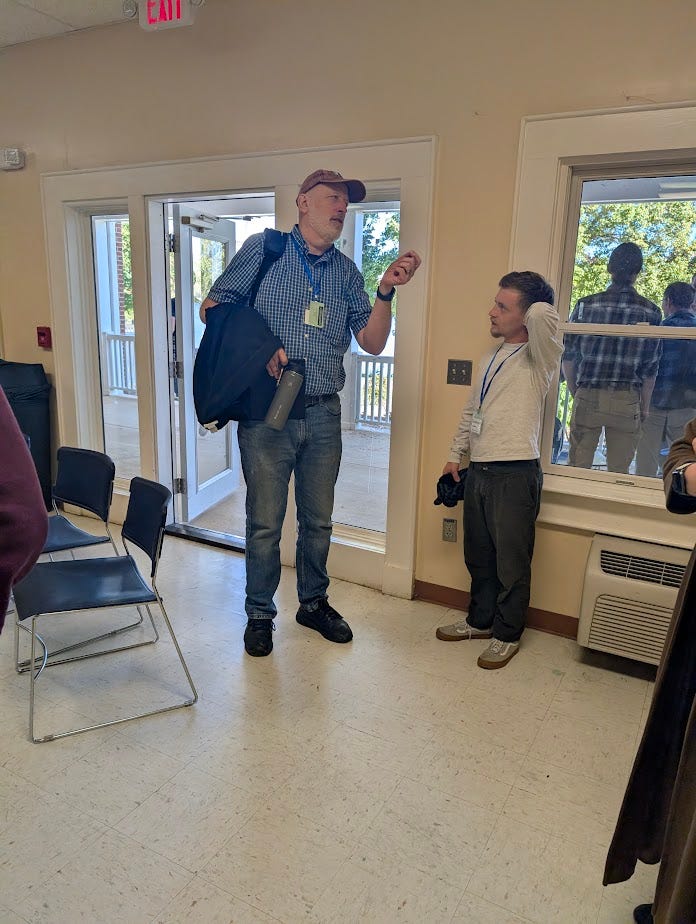
If I am noticing a thread in the writings of my Substack, it is the idea of “being a local” that is emerging as a panacea of sorts for the ailments of “the meaning crisis” many people are facing in the modern world. My conversations with folks both within the protocol and between sessions seem to confirm that people yearn for a sense of community and explore various ways to rebuild the physical framework.
Phrases such as “intentional community” or “optimistic doomerism” resonated with a few of the ideas I am working through, but the main takeaway for me was the importance of embodiment.
Regardless of whether you live in a new urbanist neighborhood or the stretches of suburbia, you will never truly be able to appreciate the ideas of “being a local” without learning the importance (and practicing) of embodiment.
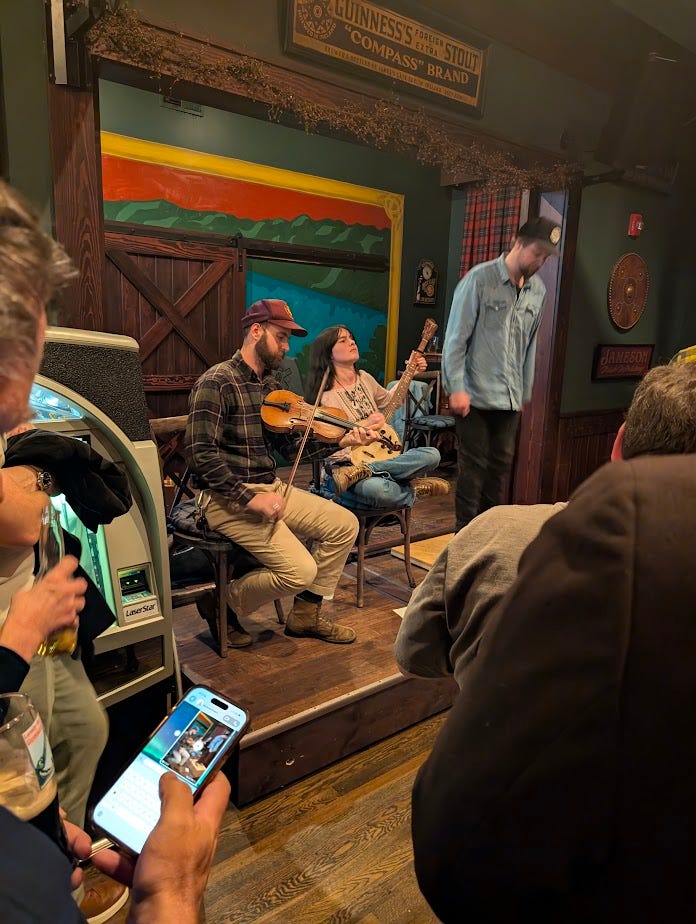
As technology progresses, we become further and further disentangled with what it means to be “embodied.” A simple example, we attended an off-site event on Friday night with the Appalachian artist Murphy Campbell at The Scottsman pub in beautiful downtown Waynesville, NC. I had the pleasure of talking to her before and after her performance, and one thing she lamented was the loss of artistry in the folk scene.
People believe they can learn how to play a banjo, mandolin, or fiddle from watching someone on YouTube, which disentangles the art from the art form. YouTube can teach you how to manipulate an instrument, but it cannot teach you how to play it like a real person next to you can. When anyone learns to do anything, they are not simply learning to do it for themselves, but essentially copying the style of what someone else does, but with their own personal mechanics.
YouTube flattens that distribution and enforces a Communist-esque distribution of art, similar to how artificial intelligence “creates” pictures, videos, or text. (I refuse to go any further in talking about AI as that was quite a contentious discussion). The lack of embodiment in how we buy most things (in the age of Amazon and delivery), interact with our food (in the age of the supermarket and DoorDash), and traverse our communities (in the age of self-driving cars and airplanes) is a much bigger piece of how we repair our world than I previously gave thought.
What use is it to create beautiful cities, towns, and villages if the people have little to no connection because they are torn so far apart from their creation, development, and maintenance?
People will yearn for the real with the proliferation of the fake. - Shari Suter
Love this! Thank you for your thoughts❤️
Nice reading your thoughts.