
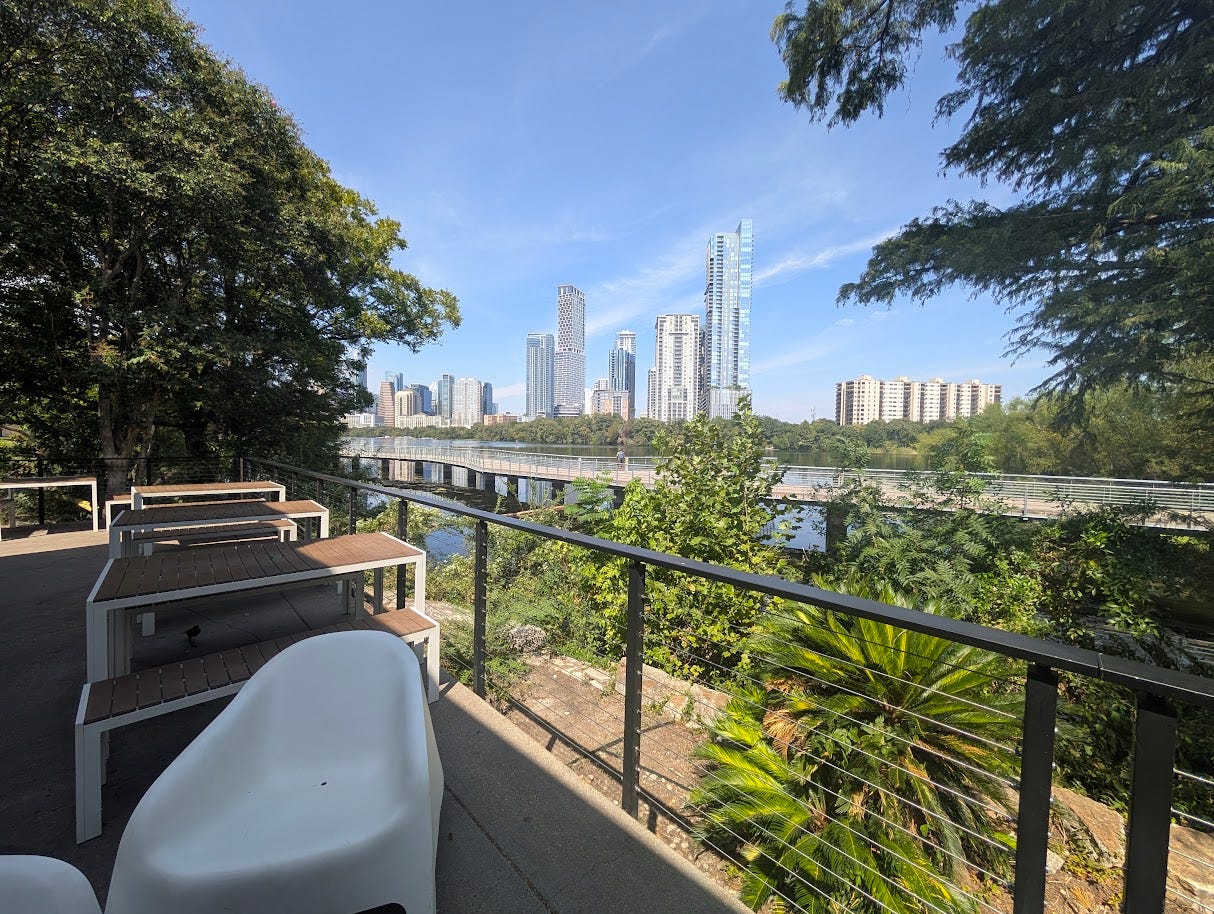
This past weekend I journeyed to Austin, Texas to see the guitar legends of the past, but came away feeling as if I had glimpsed deeply into our technology driven future. While Austin has historically been known as the “live music capital of America,” more recently it has been one of three (the exact number and cities are certainly up for debate) major epicenters across the Sun Belt (along with Nashville, TN and Miami, FL) where change is readily apparent.
Brand new glass office towers and luxury apartments are being accessed increasingly by young 20 somethings in bike lanes or by the recently launched Tesla cybercab. The city has a very palpable sense of optimism and an energetic sense of purpose that lends itself to a healthy startup culture across tech, manufacturing, and service companies.
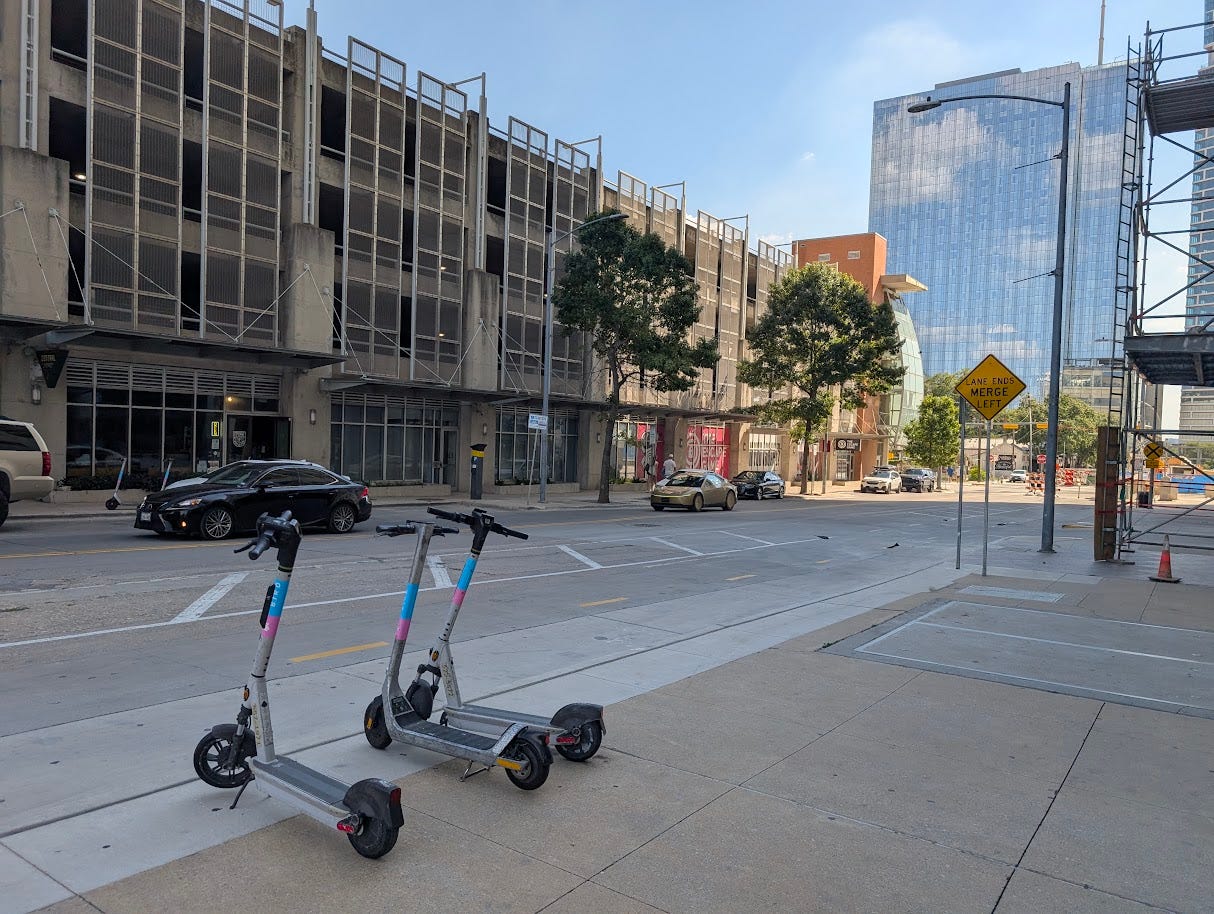
But for all of the optimism and youthfilled vigor, Austin’s flaws are visible for all with eyes to see. While many great American cities have struggled to contain their homeless populations, Austin’s tend to have characteristics all of their own. Talkative and mobile, they often stress test autonomous vehicle (AV) camera safety technology while harassing passerbys for no perceptible reason.
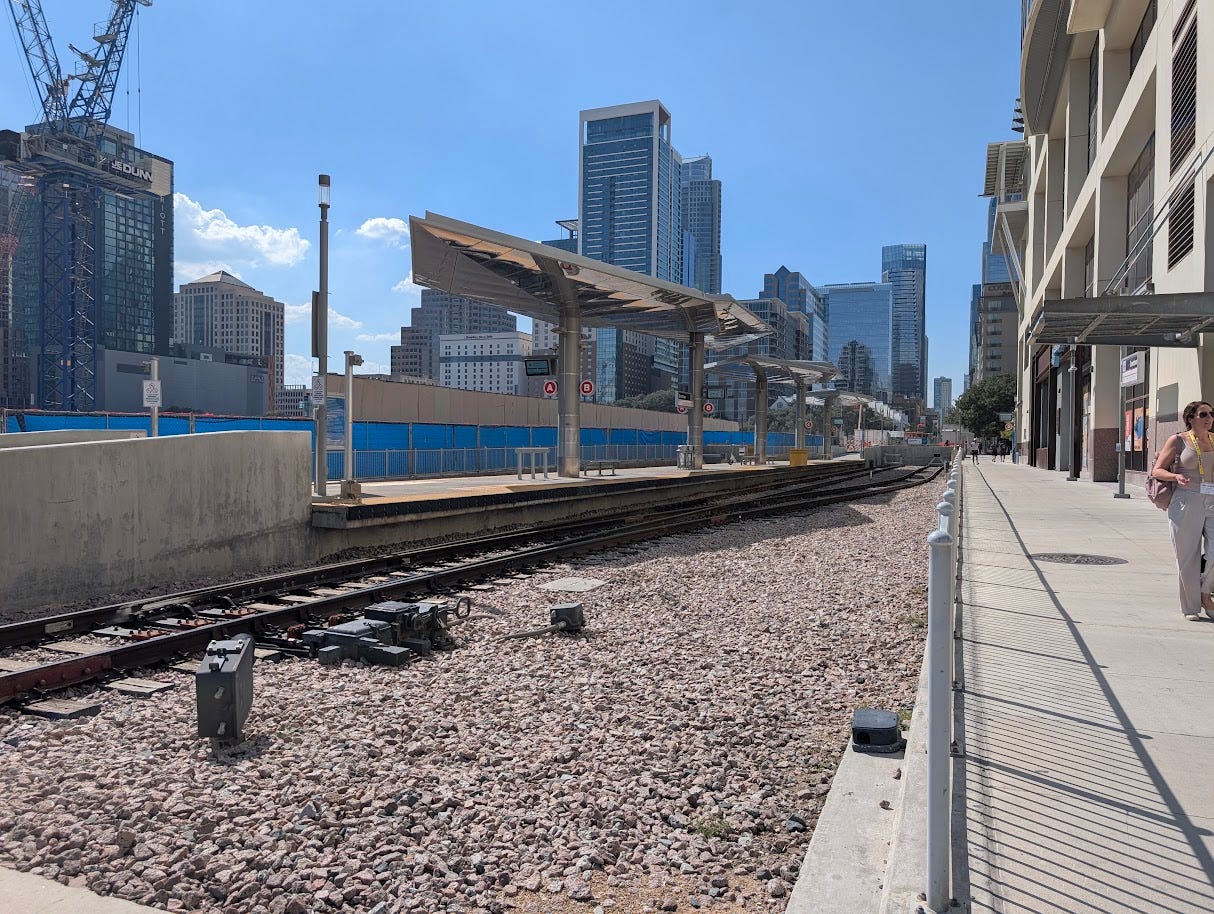
The city’s heart of nightlife is colloquially known as “Dirty Sixth” and certainly lives up to its nickname. Traffic was an ever present dull roar no matter where you went, and the cities light rail (really a commuter rail) seemed disconnected and neglected despite being relatively new.
Warts and all, I think it is better to steer a polis that is alive than one that is dead or dying, but to keep the contents of this substack coherent, I will continue my cyberpunk framing between the good, the bad, and the future that I believe is coming regardless of what we choose.
Embracing Dr. Jekyll
One of the better trends for Americans has been our craze with becoming healthier humans. Whether it is an obsession with creating greenways for walking and biking or making sure we are increasing our intake of proteins and locally sourced greens, there is a lot of good momentum to be had when it comes to being health conscious. This is readily apparent when walking through Austin’s very hot (don’t worry it’s a dry heat) downtown streets.
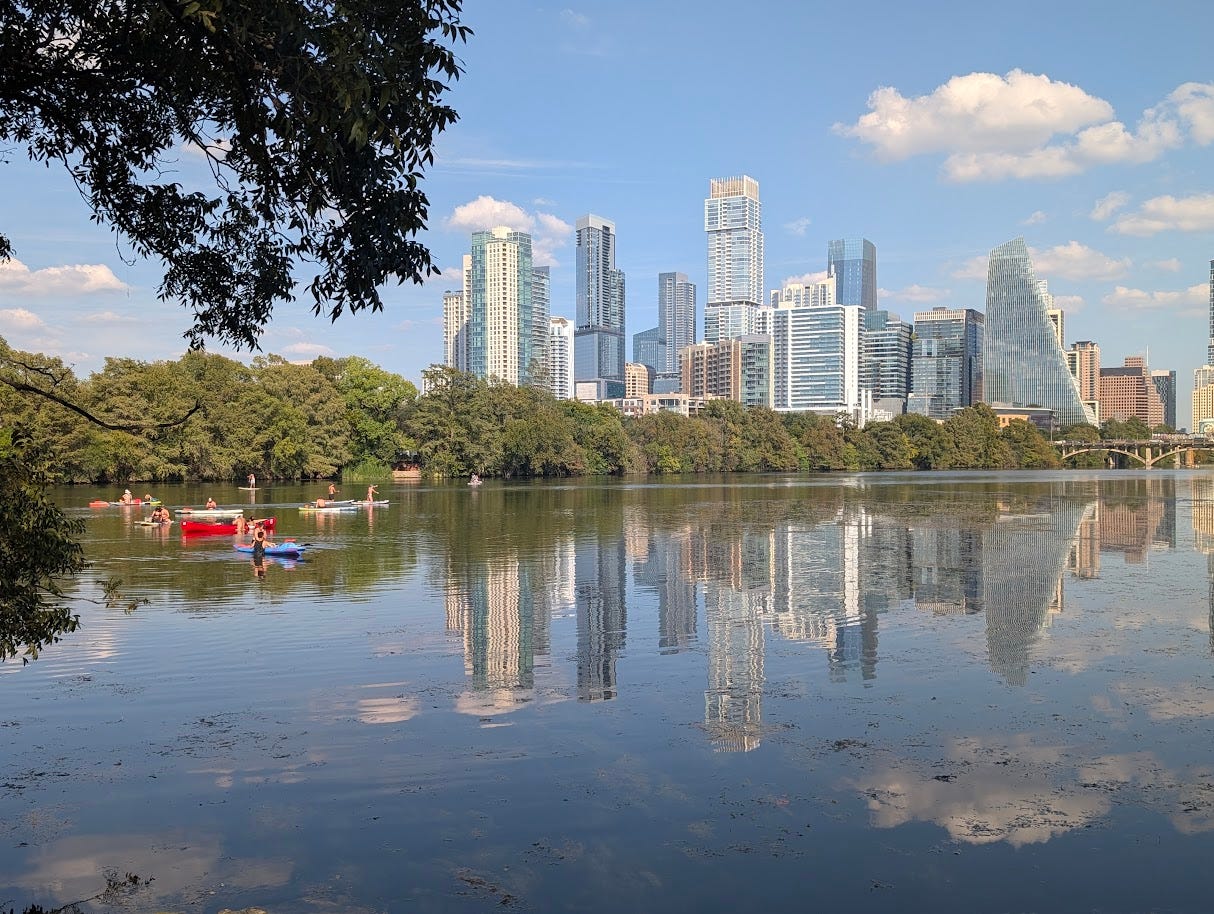
Not every city with a river running through the heart takes full advantage of it, but Austin’s riverwalk is a pedestrian paradise. Runners, walkers, bikers, and hikers made their way over dedicated bridges, through well marked trails, or took breaks at shaded stops.
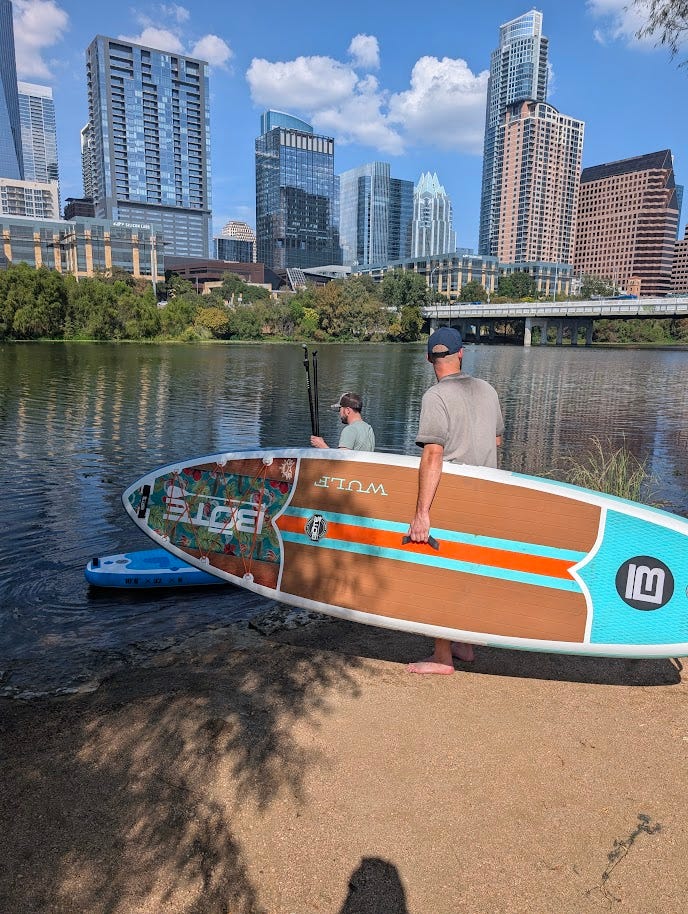
While the river did not have the prettiest water, the views of downtown and the surrounding hills were fantastic and featured kayakers, paddleboarders, and skiff pilots enjoying the beautiful weather.
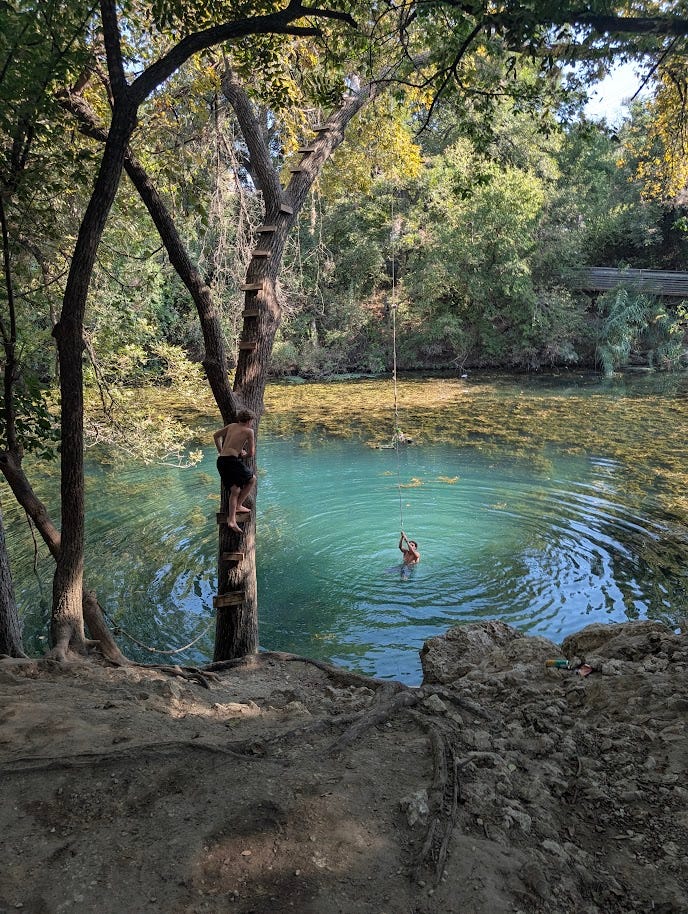
Everyone in range was both friendly and filled with a sort of energetic optimism that feels unique even in peer Sun Belt cities. While Austin is known for barbecue (not the healthiest food option in the world) it is also filled with tons of healthy alternatives, and is far less reliant on drinking for a town that is both a tourist destination and a major college town.
While our cyberpunk future certainly centers an active lifestyle, it also comes with a lot of new, shiny technology. The sort of technology that makes our current mundane tasks trivial so we can focus our energies on doing the important things! (That’s at least the sales pitch)
While I saw automated robots whizzing down sidewalks presumably carrying DoorDash orders and cleaning robots in gas stations, nothing is more on the nose than Tesla’s golden cybercabs.
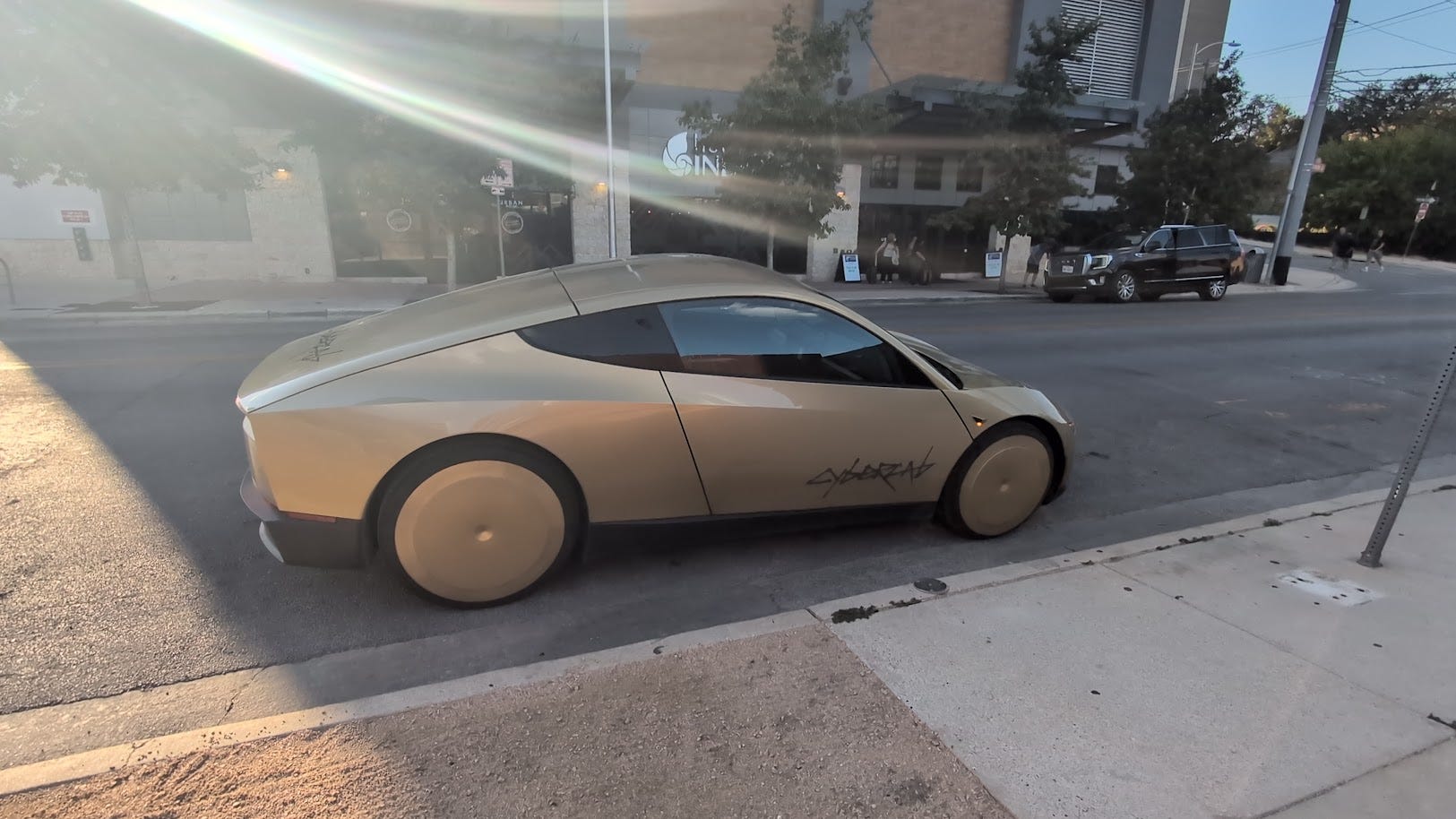
Thankfully, I was pretty aware of how the cybercab app and system worked (you hail like an Uber but you press a button to unlock the car to get inside), but the smoothness of the experience was certainly novel to me.
Both Teslas and Waymos are limited to a certain geofenced area, but within that zone they operate as a great alternative for people who prefer tot take a generally cheaper yet far more luxurious alternative to waiting for a human driven Uber or Lyft. No tipping, you pick your own music or entertainment, copious amutns of legroom, expansive views of everything around you, and a place to charge your phone while you wait make it feel like a truly transformative experience.
And while Dr. Jekyll is the health conscious, man of the future, his SoHo terrorizing alternative often reminds us of the darker sides of the dawn.
Living in Fear of Mr. Hyde

While I chose to not take photos or videos of the more disturbing things out of respect, the homeless problem was not one that could simply be ignored.
The poor you will always have with you,[a] but you will not always have me. -Matthew 26:11 NIV
It is hard to discuss the homeless problem in America because each locale tends to have different causes or solutions. Some cities choose to export their homeless problem elsewhere while others throw money at it like birdseed at brids while never quite improving things.
Austin seems to be captured by a government that does not reflect the will of those powering the dynamic sectors of the economy, and instead has allowed bus stops, parking lots, and other outdoor places to be Person v Person (PvP) zones. I witnessed two fights nearly break out (one in the day the other at night), mothers pushing strollers past people passed out with needles nearby, and trash cans overflowing with vectors of disease.
Hardly the hallmarks of a global city that attracts businessmen, wealthy tourists, and smart young people.
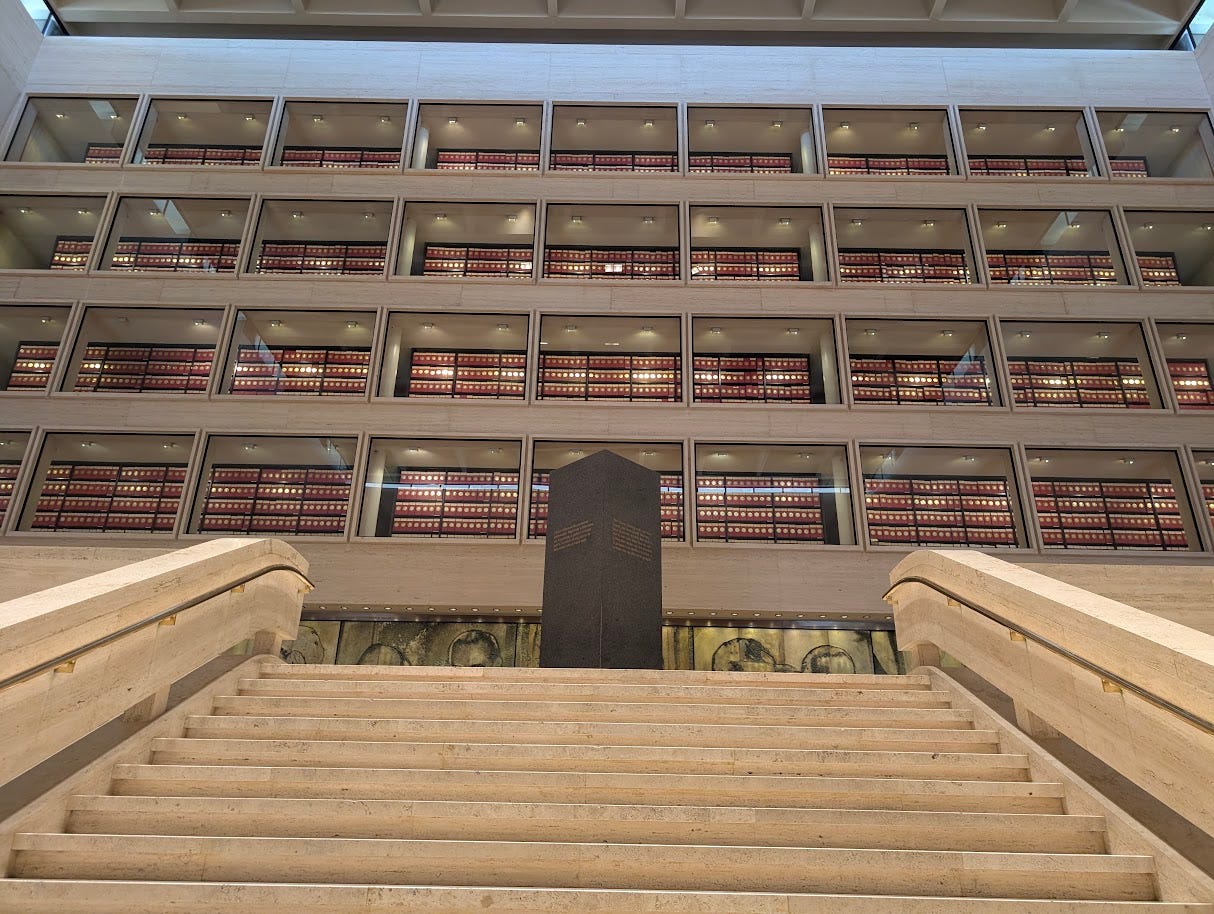
While the city had some places where one could learn about the history of both Texas and her most important denizens, the building’s architecture clashed between brutalist (Lyndon B. Johnson Presidential Library), modern (Art museum), and Italian renaissance (state capitol building).
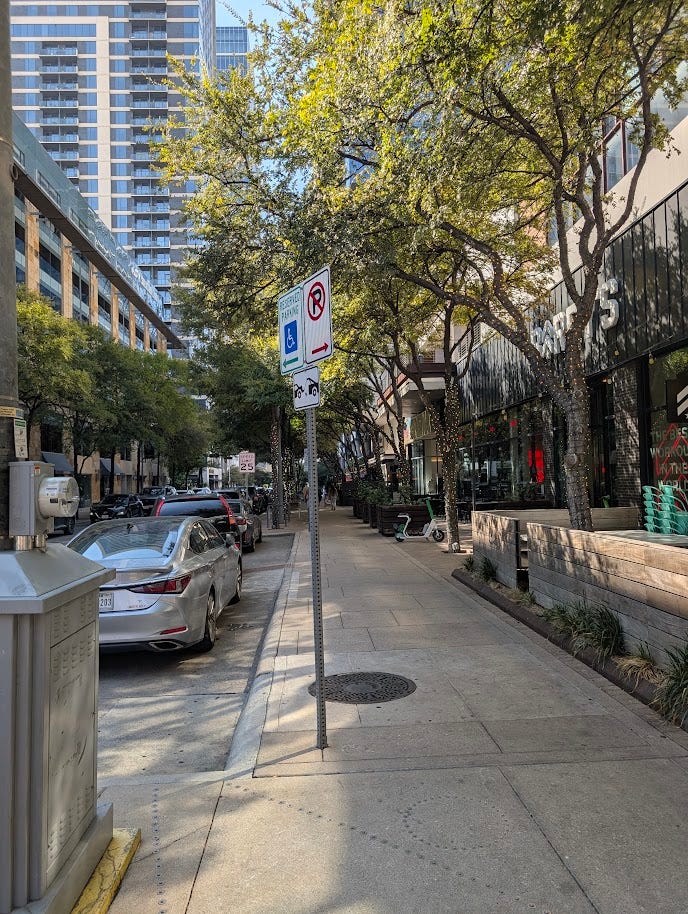
I remember thinking, “I can’t wait to walk between all of the fancy new skyscrapers and apartment buildings” expecting to find both architectural marvels and exciting streetscapes, but was dissapointed to find that the city took the worst lessons from Charlotte, NC’s uptown office business district.
The gleaming towers were merely just that, gleeming husks of glass whose awe dissapated on closer inspection.
One could simply handwave the issues with Austin by saying, “the city council/mayor are idealogically possesed and these issues cannot solve themselves,” but this is downstream of the Robotaxi cult.
While the robotaxis are convenient, there is a certain dystopia to a life of existing in a place, but not being of that place simultaneously. While the tech elite complain about the rampant issues of Austin, they have elected to live in towers of glass being whisked from point to point by silent automatons as the world they claim to exist in decays.
The only time the tech right decides it must do something is when a polis decides to change tax policy and then suddenly the tech right finds her resolve and decides to commit both human and financial capital to restore balance to their checkbooks but not society.
If they are unable to do so, they choose to flee to places like Austin or Miami or Nashville where they can rest knowing there are those who have not escaped to Elysium who will carry their mantle for them even if it is not in their best interests long term.
A Hopeful Future or a Dystopian Nightmare?
While I am highly skeptical of the newly minted “tech right,” I do believe that Austin can overcome her struggles and become a vibrant, safe city. For one, there are a ton of people who are connected to the land that want to see this become a reality.
Second, while our technology might be taking us on a path to the future envisioned in Wall-E, true Austinites tend to have a counter-cultural streak to being burdened by the things that would shackle us.
While the “hippy” culture of Asheville has ossified what was a once vibrant Appalachian community, it seems to be a bit more tempered by the dry heat of Central Texas. Hippies gather at Barton Springs to howl at a full moon, but have not had the same vigor in opposing an increase of housing supply to not just stabilize but reduce rents.
Upon discovery I was in Austin, Facebook fed me a myriad of related news stories including of a bevy of baptisms at local churches in the Austin area. Bob Dylan once sang, “it might be the devil or it might be the Lord, but you’re gonna have to serve somebody!”
Austin is at that crossroads of choosing between man or machine, mammon or your fellow man, degrowth or abundance, and I can only hope it chooses to move forward with purpose and dignity not backwards with weakness or fear.