
I know I wrote about how “beauty will not save the world,” but if you read the piece, you’ll know it was *mostly* tongue in cheek. Last night, I was working through my YouTube podcast queue, and I finally got to the (below) video from Jonathan Pageau featuring a big reason this Substack exists (Andrew Gould) and Michael Diamant.
While my first stack was written in frustration over a local road that had not been fixed for several years (finally paved as of two weeks ago!), I have contemplated putting thoughts to digital ink about “Christian urbanism” and how it can fix a lot of what people observe in “the meaning crisis.”
What is the Meaning Crisis?
If I can explain the meaning crisis in short, it is a perceived decay in people’s ability to find meaning in life. This despair has always existed at some level, but due to a rapid rise in the deconstruction of long-held beliefs, an increase in global conflicts/natural disasters, and the advent of the internet and all of its issues, people are at an all-time low when it comes to living a “meaningful life.”
The rise of the conversation around the meaning crisis has led to voices such as Jordan B. Peterson, Mary Harrington, and Ezra Klein (I tried to shoot for a decently wide net) talking about issues they otherwise might not. These voices (and many many others) have led to the creation of spaces of discourse across the fruited plains of the internet which have influenced a lot of my current thoughts/writings.
Five years ago, if you had asked me about dating, liberal ideals, urbanism, or transportation, I probably wouldn't have had any sophisticated (at least for a zillennial) answers to give you, because I simply didn't care. So what changed, and why do I believe in *Christian* urbanism so deeply?
What Makes Christian Urbanism Christian?
There is a term often thrown around the Evangelical Christian right called “Judeo-Christian beliefs” to denote that countries like America were founded on ideas from the Christian and Jewish faith traditions. Unfortunately, the term is both accurate (in that both traditions have contributed to American values) and inaccurate (upon closer inspection, the differences between the two traditions are substantial), which makes it somewhat of a misnomer.
I bring that up because while a lot of how I view “Christian urbanism” can be reflected in Jewish ideas on settlement, to conflate the two is beyond my pay grade. How I view Christian urbanism is a return to cities that are at their heart pointing up towards the Heavens with the tallest building being the church. The city would be of medium density with zoning that permits a wide variety of condos, townhomes, single-family homes, businesses, and parks that are able to be reached on foot.
“Zeke, that seems fairly radical! Surely, the evangelical right would never endorse such a liberal sounding city!”
I present to you my home of six years, Charleston, South Carolina!
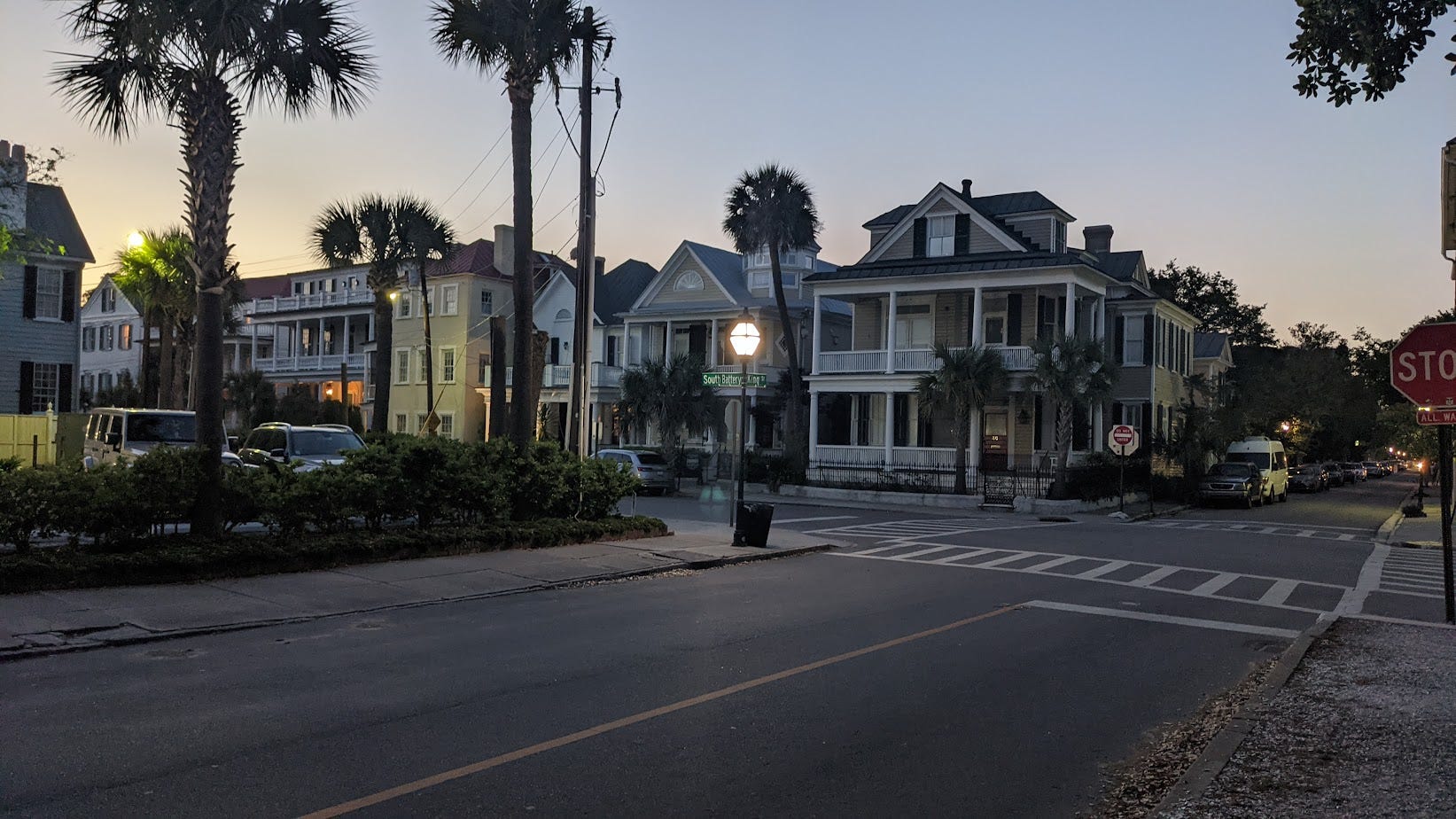
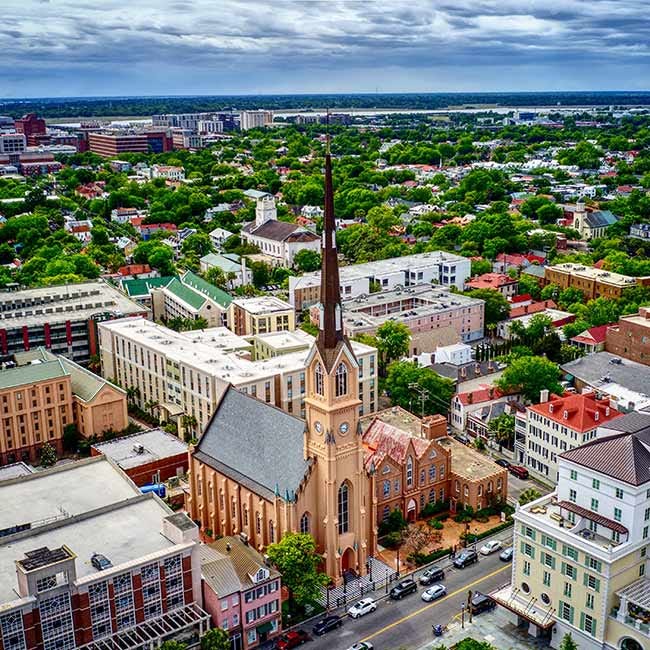
Nicknamed the, “Holy City” due to the tallest legal building being St. Matthew’s Lutheran Church, Charleston has stood as a beacon of American urbanism. In addition to the historic Lutheran presence there are beautiful: Catholic, Presbyterian, Episcopalian, AME, French Hugenot, Greek Orthodox, and even Baptist churches. Even when a tradition does not normally focus on creating beautiful, ornate buildings, the culture of Charleston enforces a baseline of beauty all around it.
Whatever you do, work at it with all your heart, as working for the Lord, not for human masters, 24 since you know that you will receive an inheritance from the Lord as a reward. It is the Lord Christ you are serving. - Colossians 3:23-24
The Christian ideal has never looked like soulless suburbia filled with “vinyl villages” of copy/paste mcmansions or the trailer parks that the left seem to think every MAGA voter hails from. The Christian ideal is something beautiful and worth preserving, something that reflects the goodness and beauty given to use by our Creator. Something that everyone can both appreciate and use without fear of assault by a criminal or a car.
God designed humans not cars (as great as the Ferrari LaFerrari is) and our surroundings should reflect that. When people can walk/bike in their day to day they are healthier (without having to take Ozempic or go to the gym) and are much more likely to patronize small businesses because they don’t have to find a place to park.
Downtown Charleston has its issues: too many hotels not enough places to live, rising traffic and insufficient transit options, a preservation society that is not always forward thinking, but it does enough right to serve as a good look for how any size municipality should build going forward.
What Does an Ideal Future Look Like for Ezekiel Carsella?
My obsession with improving urbanism started with my frustrations around the lack of non-car intercity travel options in the Southeast. Suppose Charleston had the intercity rail travel options it used to. In that case, I can imagine taking more trips to places like Charlotte, Atlanta, and Raleigh, where the only options are driving or expensive short-haul flights.
Making matters worse, after graduation, I had to move to the suburbs, where I lived with some friends, but essentially stopped seeing anyone I did not live with on a regular basis due to the friction caused by traffic and car-centric chores. No more walking to the grocery store or stopping at Sabatinos for pizza.
I noticed that the subdivision we lived in (and the larger town of Johns Island, SC) felt largely atomized. Everyone was self-absorbed in their households, and outside of their church or local bar counter of choice, they were not really united in any sort of common culture (outside of hating the traffic). This is not the future that we were promised and it is not the future that we have to have.
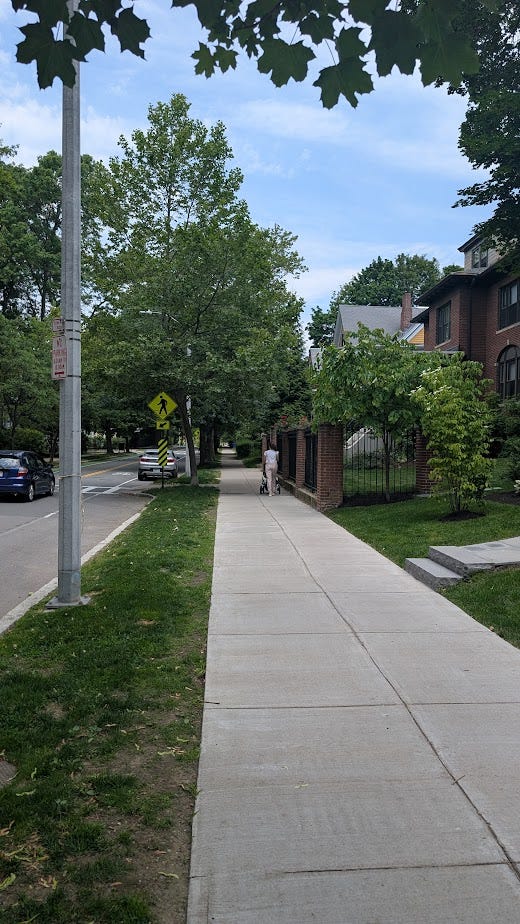
The atomization of the suburbs and megacities (replace traffic with anonymity due to sheer number of people) needs to be replaced with cities that have a common thread that binds people together. Whether that looks like Charleston, SC, Brookline, MA, or Carmel, IN matters not. What matters is that we start asking ourselves, “why don’t our politicians provide a positive vision” as opposed to reactionary policies that are intended to play catch-up, not set standards.
Amen! Feel free to come to bring that Charleston energy to Virginia Beach anytime. Every time I go there, I want to bring it home with me.