
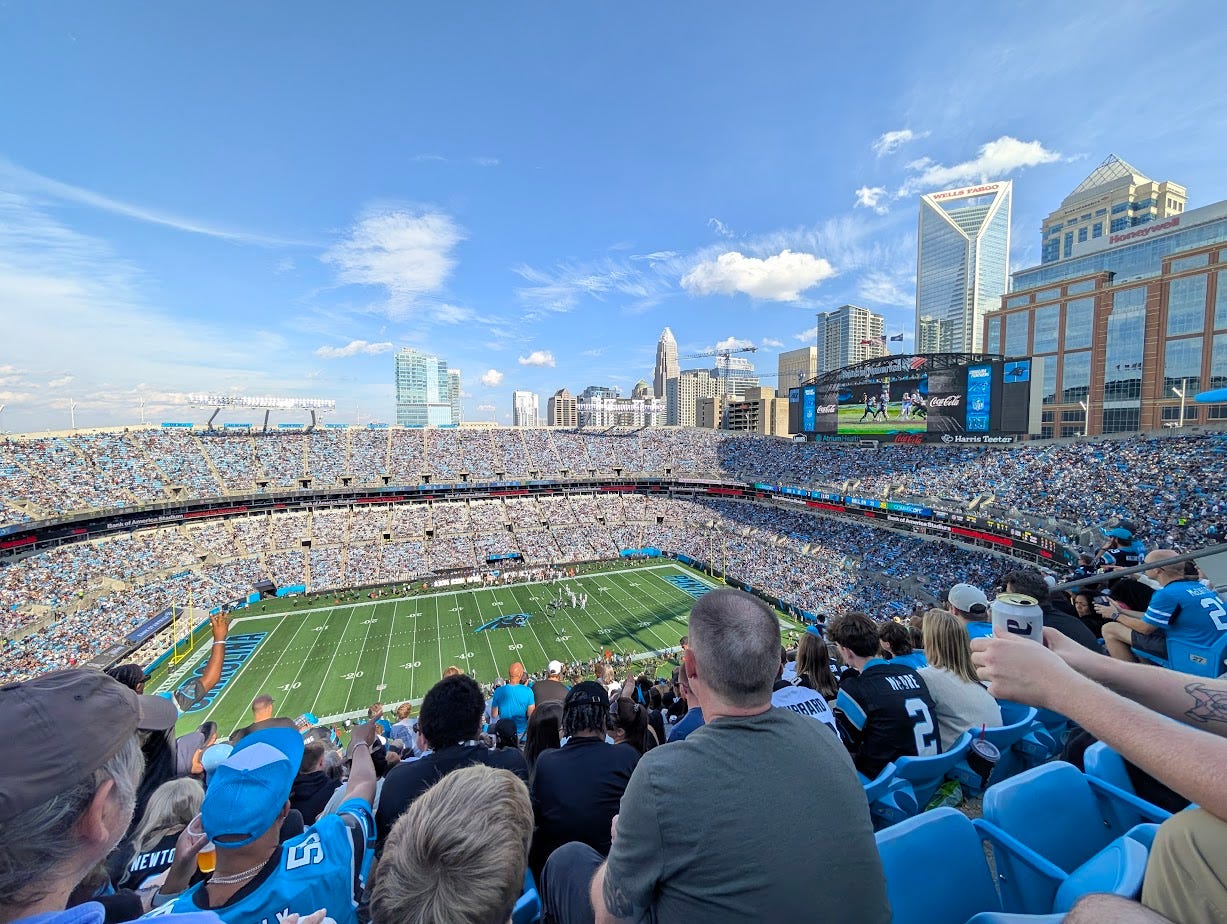
The past two weekends, I’ve been checking off stadiums from my sports bucket list, and I have realized that sporting events might be the most obvious ways we can learn to move from being tourists to being pilgrims.
What Does Sport Have to Do With Anything?

I know this is a bit of a departure from my usual writing, but sports are as integral to how we live in cities as anything else. College towns (especially in the south) are built around sports. Retail stores are heavily indexed in team merch, bars and restaurants are themed around mascots and in-jokes, and the town’s vibrancy ebbs and flows with gameday.
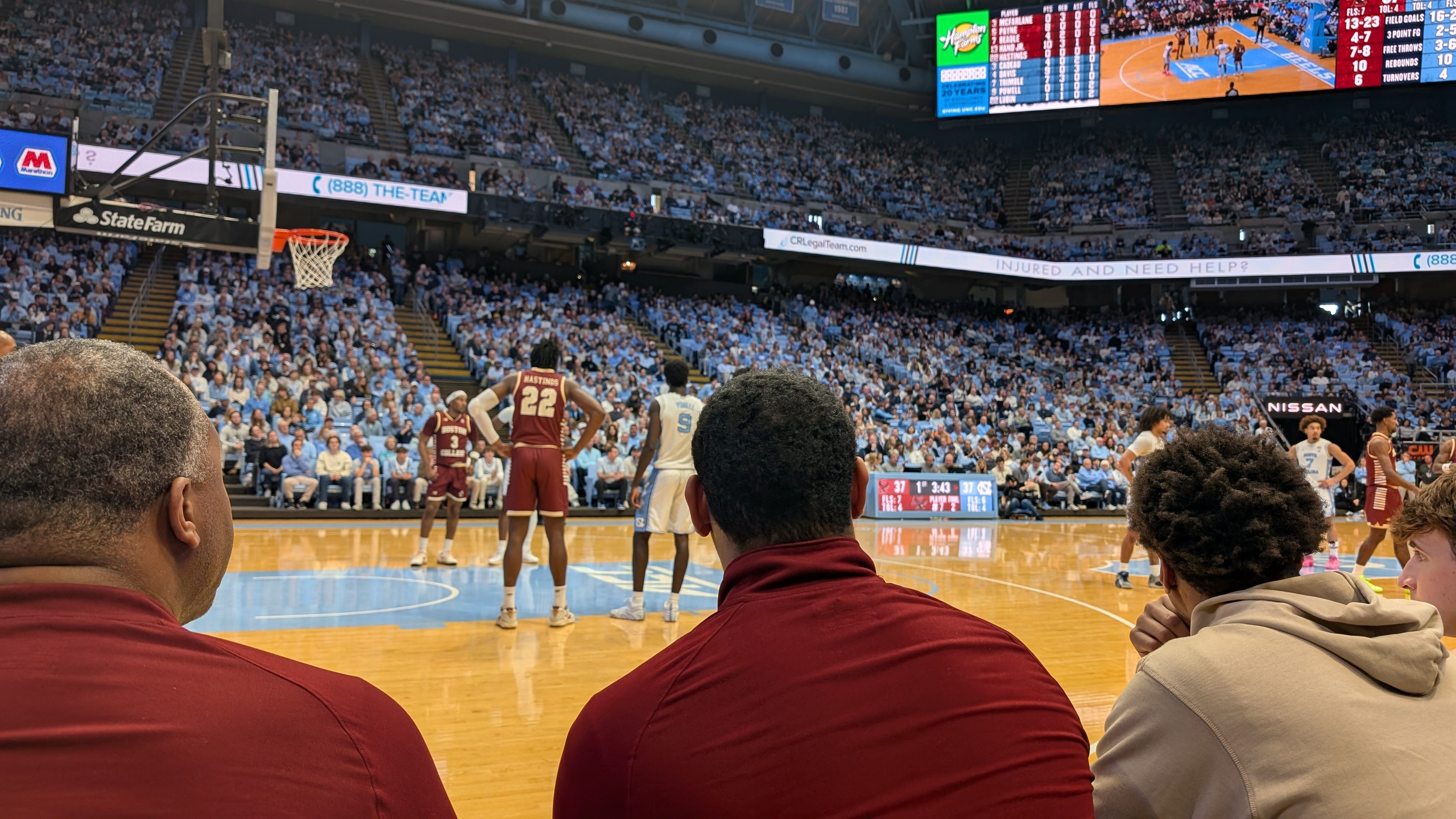
But when your town is built around something that is deeply important, it reminds us that we are a deeply spiritual people. In sports, fans rarely view themselves as tourists when checking off stadiums and rivalry games off their bucket list. Stadiums like Chapel Hill’s Dean Smith Center or Duke’s Cameron Indoor Stadium require fans from far away to come dressed in their special colors, participate in local rituals and customs, and buy new good luck charms to take home with them.
Sports fandom serves as an excellent facsimile of spiritual searching because both require worship, devotion, and sacrifice while providing a sense of “meaning” in a world that can otherwise feel meaningless. They provide community and connection by binding people together who would otherwise be complete strangers.
While the average casual fan might not see themselves as a pilgrim, the average fan more than likely does, and I think that is actually a very positive thing.
Why Being a Tourist is No Bene
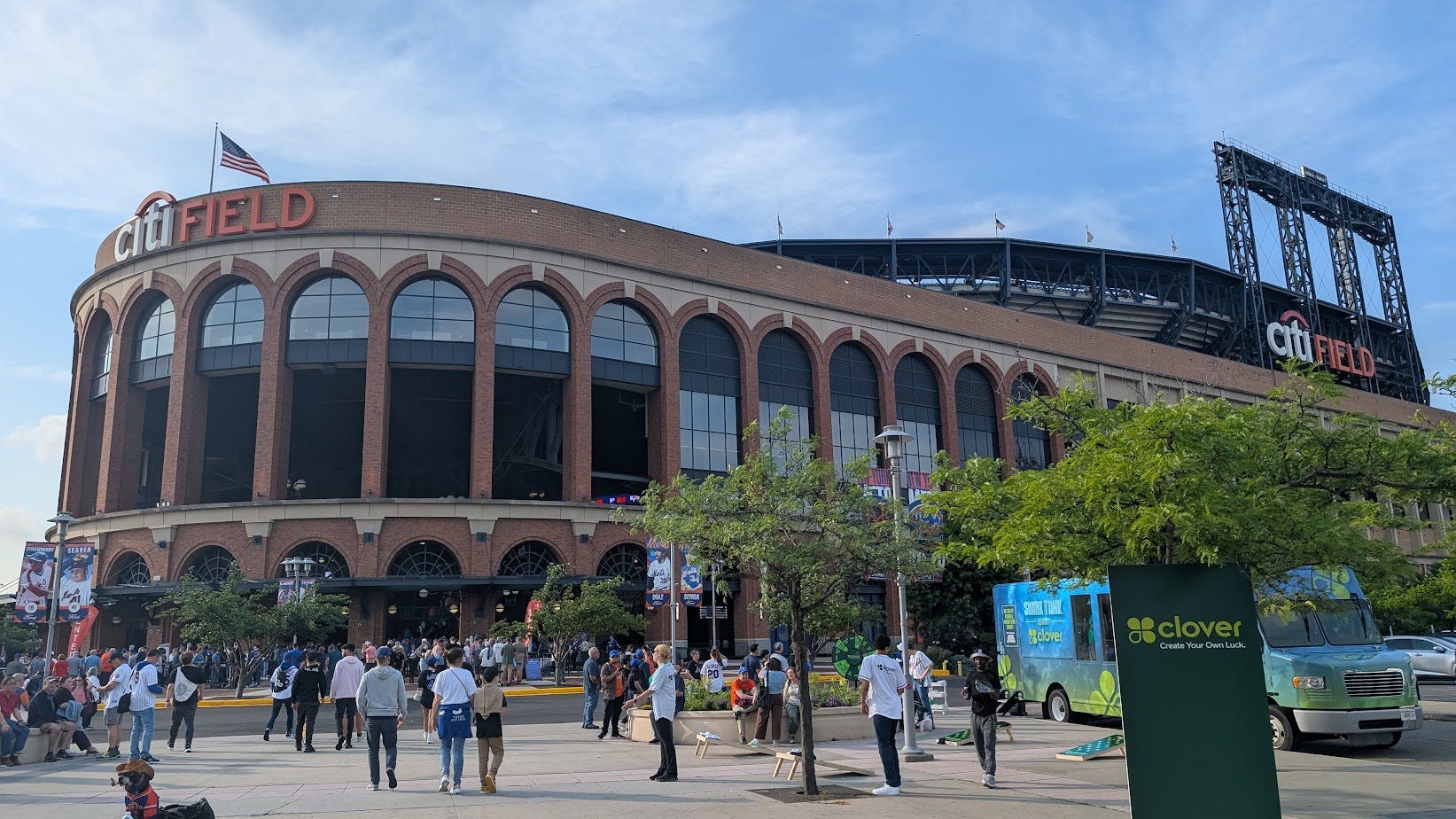
While it is not a moral failing to be a tourist (we all have been at one point or another), the tourism industry has begun to rot and decay as tourists overstay their welcome in places such as Spain, Italy, and Mexico.
Tourists are often stereotyped as being loud, obnoxious, oblivious of local customs, and sticking out as a sore thumb. A far cry from our lifelong sports fan who has traveled far and wide to mingle with thousands of his fellow fans.
The sports fan - much like the pilgrim - is a traveler who travels with the destination in mind because he knows something about it that means something to him. He’s not picking out a dot on a map because he saw a reel about the best hidden waterfalls or hole-in-the-wall restaurants. He fits in because he knows what to wear, what not to wear, what things to say, and what faux pas to avoid because he has respect for the “sacred ground” he traverses.
The modern-day tourist - unfortunately - is too obsessed with gawking at the things he is told to find interesting and hardly has any proper grasp on what is actually taking place. Unfortunately, these behaviors mold the locals' behavior.
To support these tourists, the locals are forced to become caricatures of themselves. A cosplay or drag show for the benefit of the out-of-towners. Much like when Kramer in Seinfeld put on a “mugging” for the benefit of German tourists on a scenic bus so they could tell their friends, “they saw a real NYC mugging.”
The loop of tourists and their dollars often feeds these negative stereotypes and forces them to exist; otherwise, “the city isn’t what it used to be.” This is why residents of cities such as Barcelona and Lisbon have had enough and have taken out their frustration on the tourists, despite their economies being reliant on their’ dollars (to a degree).
How do we fix the problem?
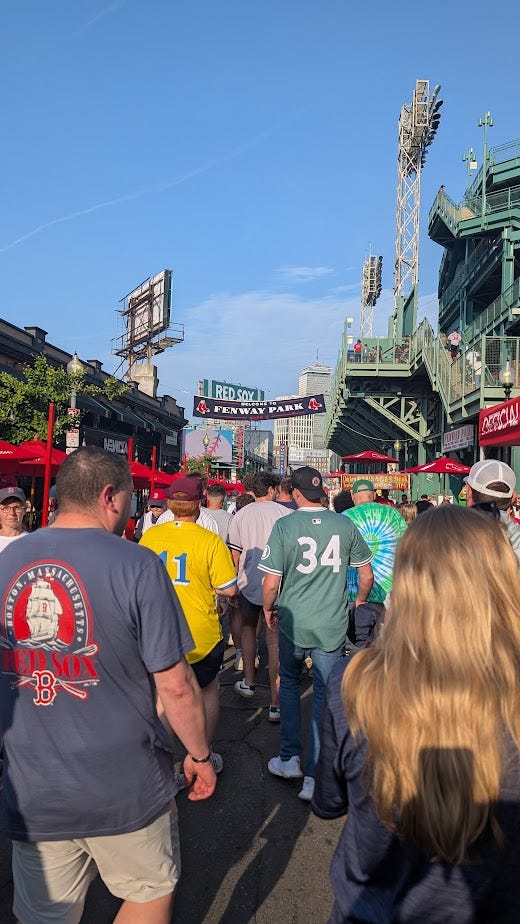
If there is one thing I have learned, it is that most fans - even bitter rivals - love being hospitable. I’ve been to both sides of the Yankees vs Red Sox rivalry, and I never felt threatened by wearing my New York Yankees clothing. Sure, I took a lot of jokes at my expense, but the people of Boston are much friendlier than their reputation precedes them.
On the flipside, wearing a sports jersey in friendly or neutral territory is one of the fastest ways for you to make friends in 2025. I was at a blues concert in Asheville a few months ago, wearing my Lamar Jackson Baltimore Ravens jersey, and I made a friend at the show because the Ravens were playing that night. We talked for like an hour before the show and exchanged numbers.
There is something extremely powerful about sports that you can probably explore in a different piece. Still, let's take away the positives of community and pilgrimage when we think about traveling on holiday.
The special thing about me putting on a Ravens jersey is not the material, the authenticity of the kit, or even the name on the back, but the fact that it tells a little bit about me. “Are you from B-more? What makes you a Ravens fan?”
It gives me an instant connection that I can share with someone I wouldn’t know from Adam. The same could be said to a pilgrim walking the Camino de Santiago or a pilgrim journeying to Mecca on hajj. Undertaking a pilgrimage gives pilgrims something in common with locals or fellow pilgrims, creating bonds rather than barriers.

Planning a trip is one of my favorite parts, but a trip does not have to be just a vacation - regardless of the destination. Let’s put my ideas in a practical sense.
Say you want to plan a vacation from the mountains to the sea. Take a popular beach town like Fernandina Beach, Florida, for example. How do you transform a trip like that?
Well, the tourist goes with the intention of extraction. Every moment is captive for their Instagram feed or the latest gossip in the family group text. “You won’t believe what we did at the beach, OMG!”
This behavior is a large part of the difference between the tourist and the pilgrim. There is nothing wrong with having fun and creating lifelong memories, but they should not be used to make your life seem more interesting than it is. Chasing these thrills is as dangerous as it gets for your mental and spiritual health.
Do some research before you go. Find out that Amelia Island/Fernandina Beach has a wonderfully rich history, and expose your kids to some of it to learn what role it played in the country they live in. As you explore, use your eyes to see and absorb, not gawk. Treat people with respect and be curious to learn their stories, and they will do the same for you 9 times out of 10.
These are the actions of the pilgrim, and if we had more pilgrims in the world, the world would be a far better place. Unfortunately, this pilgrim has been 0-3 in his sports pilgrimages this year, and might need to rethink his strategy.