
I don’t know when it became woke to want safe, walkable streets, but according to the Department of Transportation, projects that prioritize pedestrianized spaces at the cost of cars are apparently too progressive.
As a self-proclaimed “Christian urbanist,” this annoyed me especially because I know the typical responses to this proclamation all come from the urbanist left. “See the right just wants to kill everyone with cars and diabetes because no one can walk anywhere anymore.” or “Haha I thought the right was, ‘pro-life’ but they enable pro death policies!”
While the criticisms are pretty spot on, I feel that the current car-centric planning and design that has become a culture war topic has never been given much thought on the right. So, why do we want to prioritize walking? And how on earth is taking the road back from cars not woke? Well…
The World Before Cars
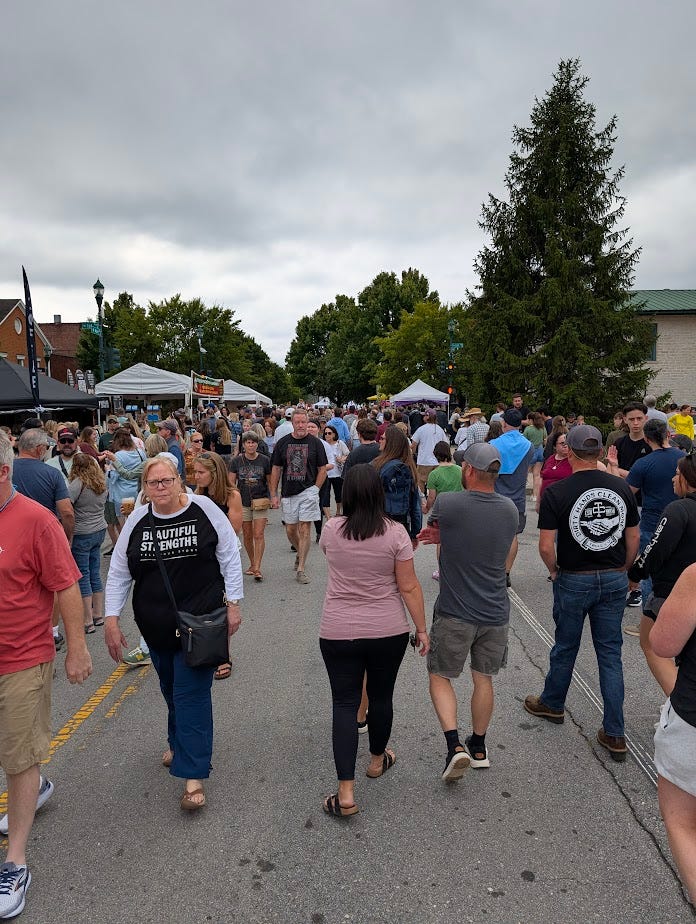
While we only get to experience the joy of mingling with friends, family, and visitors in a fully pedestrianized space during festivals, this was the norm before 1910. Unfortunately, due to the rapid pace of change in the last 100 years, it seems abnormal to think of a world that did not have wide streets or personal modes of transportation available to everyone, regardless of their relative economic status.
There was a question that went viral some time ago asking, “where did the Romans park their chariots near the Colosseum?” which seems completely normal in a world of football stadiums surrounded by thousands of parking lots but of course is absolutely asinine if any other context. While certain places in Europe have eschewed car-centric infrastructure in villages and smaller cities, Americans gleefully destroyed as much history as possible to put in new roads, strip malls, gas stations, and parking lots for their shiny new toys.
But in context, can you actually blame them?
The American Dream
The American mind has always been far more optimistic than her European neighbors because we tend to do a lot of winning. We conquered the lower 48 against stiff competition! We won not one but two world wars! We conquered the atom and split her asunder! We tamed rivers and toppled empires!
So, if someone is selling you a product that will enable you to conquer, as an American, odds are you will say yes. The future was supposed to be the automobile, and even as an urbanist/railfan, I can recognize the immediate benefits of the automobile in a world where trains were slow, buses were stinky, and planes were not quite yet affordable or ubiquitous.
The car was sold as freedom. The freedom to go off-road and explore the wilds, the freedom to travel scenic highways and byways, and the freedom to pick where you stop whenever you want! It is honestly a no-brainer, especially when the interstates were freshly paved and the cars actually looked wicked cool compared to what we have today.
Of course, no one really anticipated the population to skyrocket, and if everyone has a car, well, that also means a pesky thing called traffic, which leads to accidents and, of course, a loss of freedom. That bottleneck has not deterred people from believing that traffic is solvable as long as those pesky Yankees just move back to Ohio and New Jersey and we install one more lane!
The Pesky Problem With Freedom
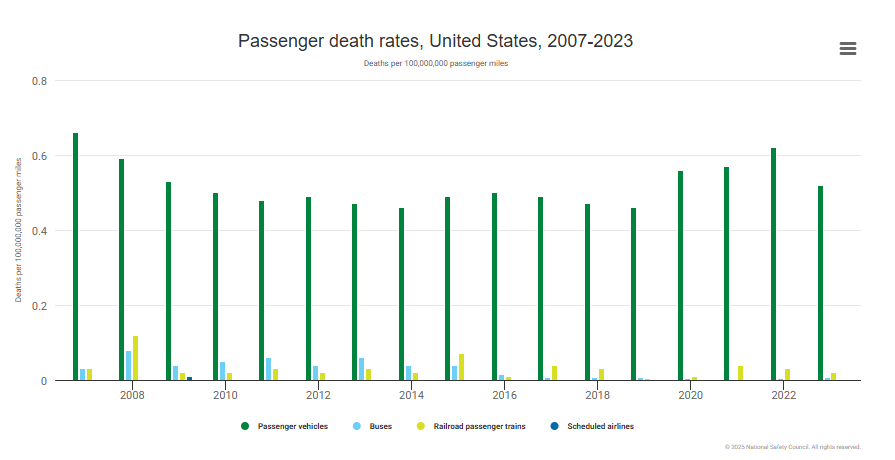
Unfortunately, having cars on the road means an inherent danger to pedestrians. You can look at this from two different lenses. A safetyist view, “we must eliminate all threats to people, which means we can have no cars on the road,” or a practical perspective, “we must reduce interactions between people walking and bicycling and driving their cars to reduce needless deaths.”
Just because we are making our streets safer does not mean we are trying to: a) impede on freedom of movement, b) infringe on people with cars ability to get where they need to go, or c) worship the pedestrian as a golden calf. It just means we don’t want to see people die if we don’t have to.
One thing people will often cite is, “My tax dollars go to the roads and I should be allowed to use them as I please.” But people who live in a city that is walkable are often not driving, but their roads are usually widened or otherwise made amenable to car traffic not at their benefit but at their expense, to accommodate out-of-city suburban traffic.
In the DOT’s statement, they cited “impacts on cars’ ability to travel at high speeds” as to the reason why they would not fund these supposed “radical” investments in public safety. But a simple physics lesson would tell you why you would not want objects weighing over a ton moving at high speeds around pedestrians or animals.
As Jerry Seinfeld once said, “This isn’t going to be good for anybody.” It should be basic common sense why cars should drive below 25 mph near walking traffic (for awareness, quicker braking time, and a lower chance of fatality upon impact), but there is something about being behind the wheel that just cannot abide by such measures.
According to the SC Department of Public Safety, SC sees 145,761 traffic collisions per year with 1,047 deaths. There is a crash every 3.6 minutes on average. Why is this acceptable?
There is zero outrage at these numbers, despite being almost double the amount of homicides per year (595 in 2022). Zero!!!!
Obviously, many of these deaths would not be prevented by the measures on the chopping block, but our culture around what we allow cars to get away with is obviously extremely out of whack and needs to be brought in alignment with our other modes of transportation.
What a Positive Model Can Look Like
I can reference Hoboken’s Vision Zero success in eliminating traffic deaths, but most places in America are not as politically progressive as Hoboken. How does small or medium-sized America create great spaces that we want to spend time (and money!!) in without being “woke?”
First of all, isn’t it so stupid that we have to play these culture war games when we want to talk about positive policy visions? That we have to couch our words in terms anemable to our political sensibilities?
Second, to create great spaces, we must recognize how people move around and design spaces that enable them to do so safely. Two cities here in Upstate, South Carolina have built a system of parking garages and small (but convenient) surface lots that enable highly walkable environments that are accessed by parking on the periphery so cars are not speeding down the main walking streets.
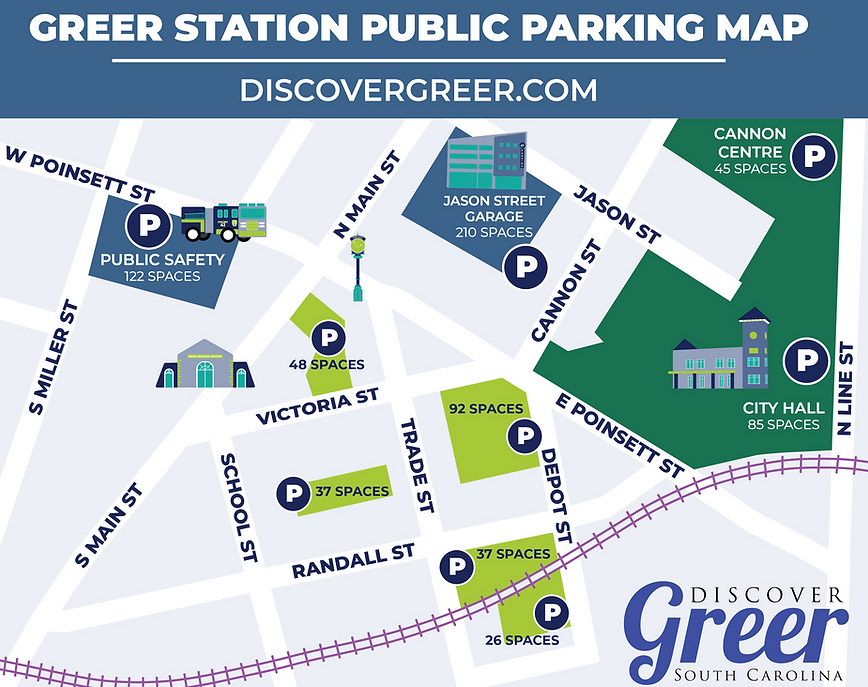
For those looking to access businesses but who have issues with walking long distances, Greer offers a fixed-route shuttle from Tuesday through Sunday to help you move around more efficiently.
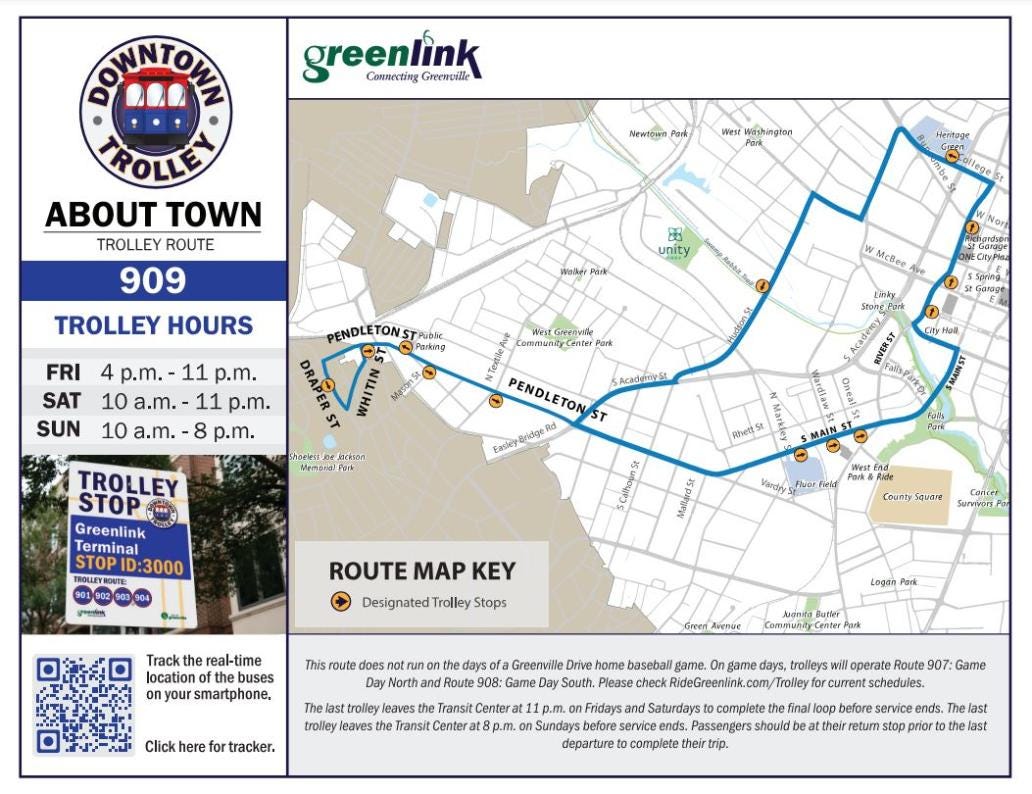
Downtown Greenville, SC has a charming (and free) trolley that also operates on a fixed-stop system with stops at a mix of parking garages and highlights of Greenville’s growing walkable downtown.
The mode share of people driving cars in North America is unlikely to change significantly anytime soon, and that is honestly okay. However, if you want beautifully dense, walkable spaces now, you must build them with today's realities in mind. Absent massive spending and eminent domain, public transit projects are unlikely to thrive without dense, car-lite, or car-free areas.
We can build those first and develop with a future in mind that creates more public transit opportunities without disenfranchising the vast majority of the population that drives because that is what our country is currently centered around.