
I’ve had about 3-4 articles in progress since my last, and I apologize for my lack of ability to finish things I put my mind toward. Recently, I read Paul Anleitner’s Based on a True Story and a LOT stood out to me, but I want to focus on the ideas of different generations having a “story” that guides them in development.
He breaks down humanity (roughly) into three prevailing stories: premodern (stories of myth and fairy tale filled with gods and mosters e.x The Odyssey), modern (stories of people who, through hard work, not mere privilege or providence, succeed e.x Rocky), and the postmodern antistory (heroes who see through the world’s veils to uncover the world as it really is e.x The Matrix). Essentially, his argument could be boiled down to (in my reading) that we must reject the postmodern anti-story and embrace older forms of stories that embrace a positive vision for humanity.
While I am broadly in favor of and sympathetic to this line of reasoning, there is a warning that once the genie is out of the bottle, the world is forever changed, and that has to be addressed.
On Creating a Positive Vision out of What We Can See
Anleitner has the right intuition that the postmodern story, despite its success in proliferation, has utterly blasted our taste buds with too much heat and not enough flavor. The anti-hero, the lovable loser, and the denigration of prior heroes have created a world of cynicism and doubt without providing a better alternative to point towards beyond “just be the good guy.”
Every way of a man is right in his own eyes, But the Lord weighs the hearts. - Proverbs 21:2 NKJV
Stories are not merely meant to be consumed, but to be thought over and provide a pathway of illumination for us from the time we are a young child to the time we are ready to depart this earthly plane. If our stories are cynical, how can we expect to build great spaces to both inhabit and preserve for our future children?
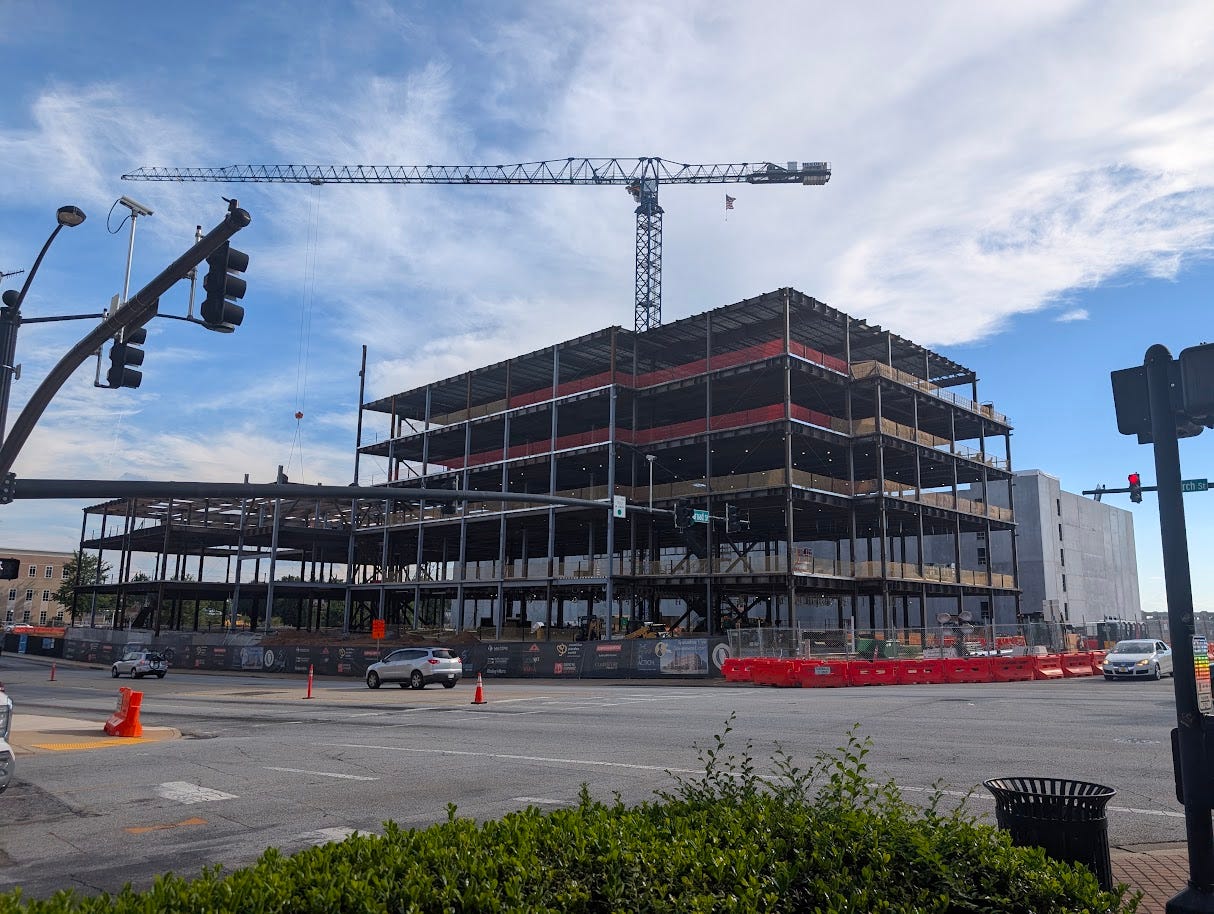
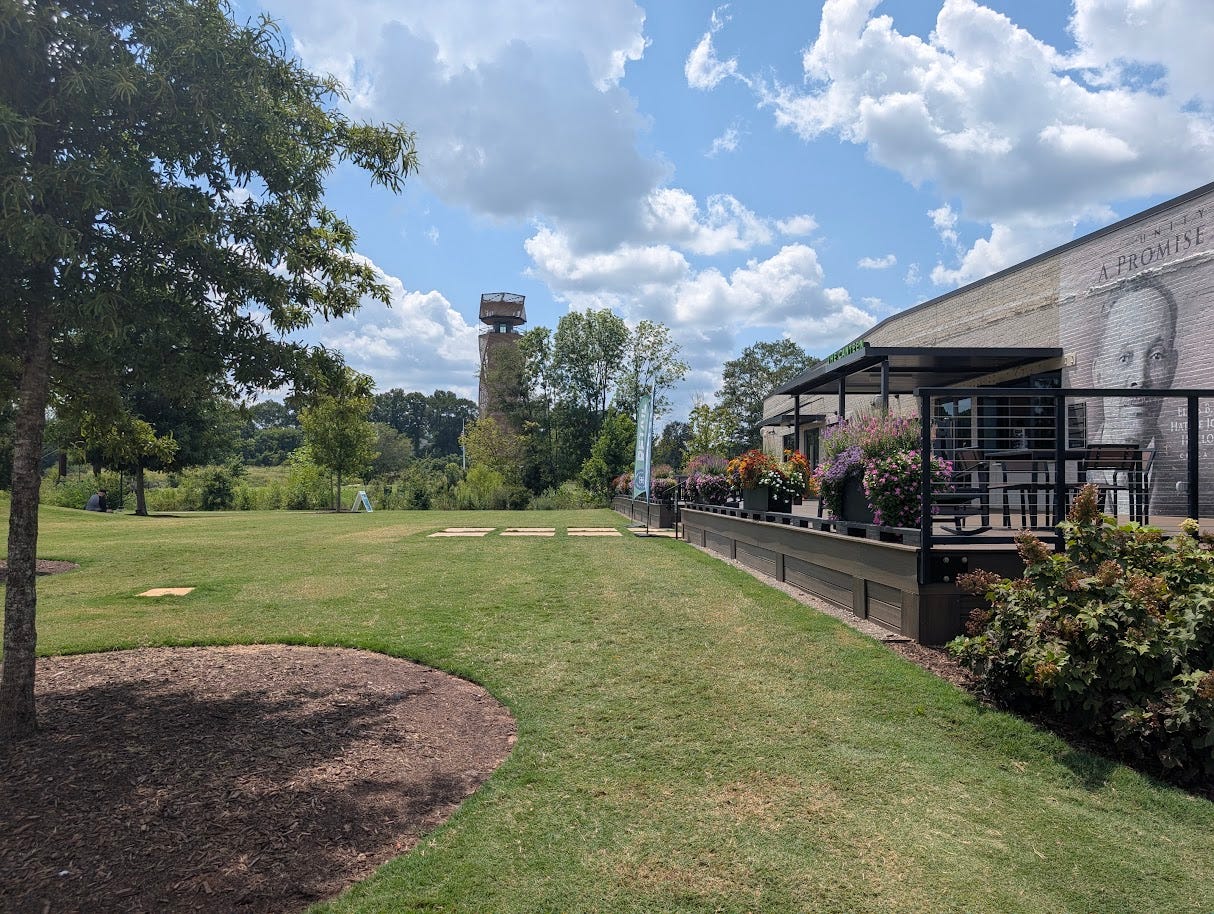
Well, even in a society as cynical as ours, in some places the cranes are booming, and the flowers are blossoming without being covered by idly thrown trash or fast forgotten loved ones. I chose a construction project in Spartanburg, SC as the city has often been the red-headed stepchild to South Carolina’s golden boy of Greenville.
Outlets such as CNN and the Wall Street Journal have written glowing reviews of the home of Stecca Bread and the Reedy River, while neighboring Spartanburg has only hosted negative stories of disgraced County Council members and locals in a fight over data center expansion.
Yeesh!
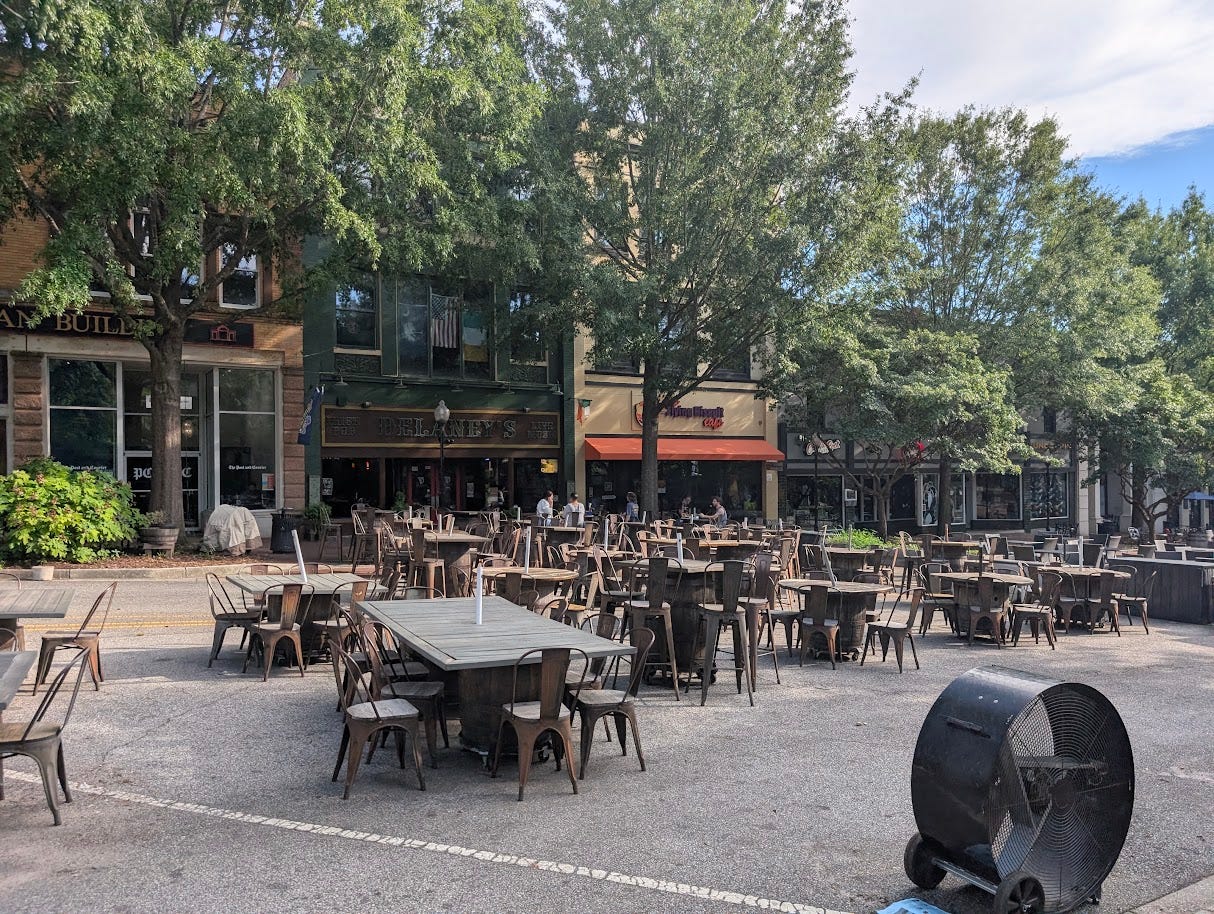
While Greenville has generally embraced a positive vision for both the downtown and broader County area by blocking 24-hour fast food restaurants in favor of future walkable streets, Spartanburg has generally lacked the same gravity in her downtown area to spawn visible change.
And despite a lack of clear leadership from the County Council, City Council, or the mayor, Spartanburg has been quietly building some great projects that could one day lead to a reversal of fortunes for the place formerly known as “Hub City.”
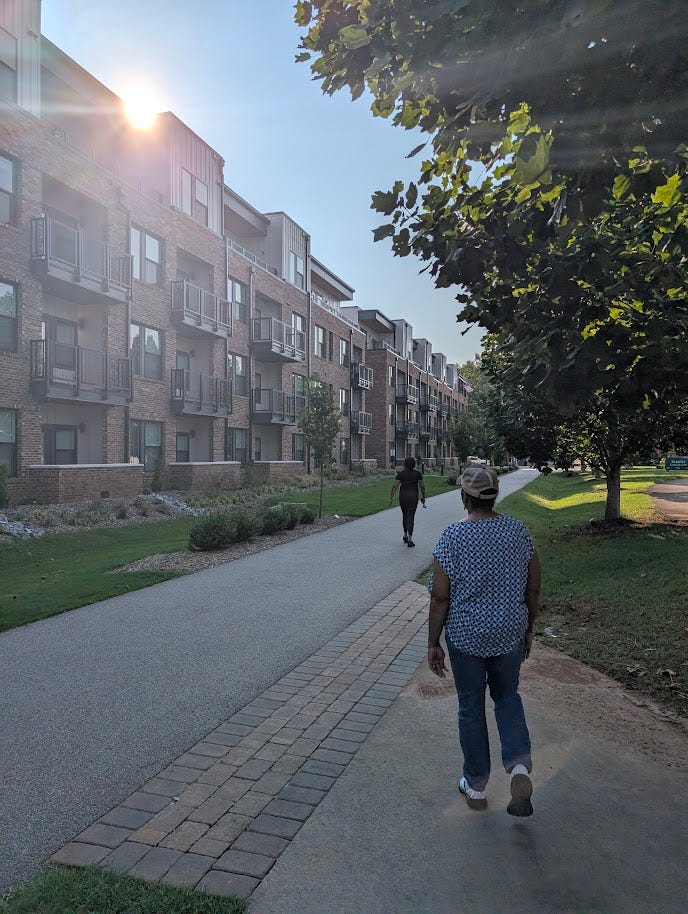
And even when general society lacks right order, beauty and order can emerge! Despite my general gripes with Spartanburg’s lack of cohesion and apathetic response to growth, there is always a positive for every negative. I’ve watched the Mary Black Rail Trail grow from a simple walking and biking path into a really enjoyable neighborhood in its own right.
The rail trail connects pretty seamlessly with bike lanes leading to downtown Spartanburg, the Duncan Park Lake trails, and a growing number of restaurants, apartments, and amenities like gyms and dog parks. Whether you visit on a Wednesday evening or Saturday morning, the pedestrian corridor is far busier than the five-lane-wide Union Street that runs parallel.
Despite more than 800,000 trail visitors last year, city efforts to make it more useful by creating proper bike/pedestrian corridors have received heavy pushback from people who only travel through, not in Spartanburg.
Their complaints are filled with the cynicism and distrust that plague our world thanks to the postmodern anti-story.
“I never see anyone use bike lanes. I know that they just want to force us into 15-minute cities.”
“This is all a boondoggle and doesn’t help anyone that lives here. Why would anyone who lives in the South want to use anything but a car to get around?”
“These bike lanes NEVER WORK. Why can’t these liberals understand that we like to drive?”
People on the left will misunderstand these critiques as political (despite the language) when it is merely people expressing themselves the only way they have been taught how. To mistrust anyone who tells them something that sounds nice, because we can never have nice things.
The second issue is that people have forgotten how to use nostalgia (even me!) to rightly order our future to prosper.
On Rightly Ordered Nostalgia: Creating a Better World from the Past
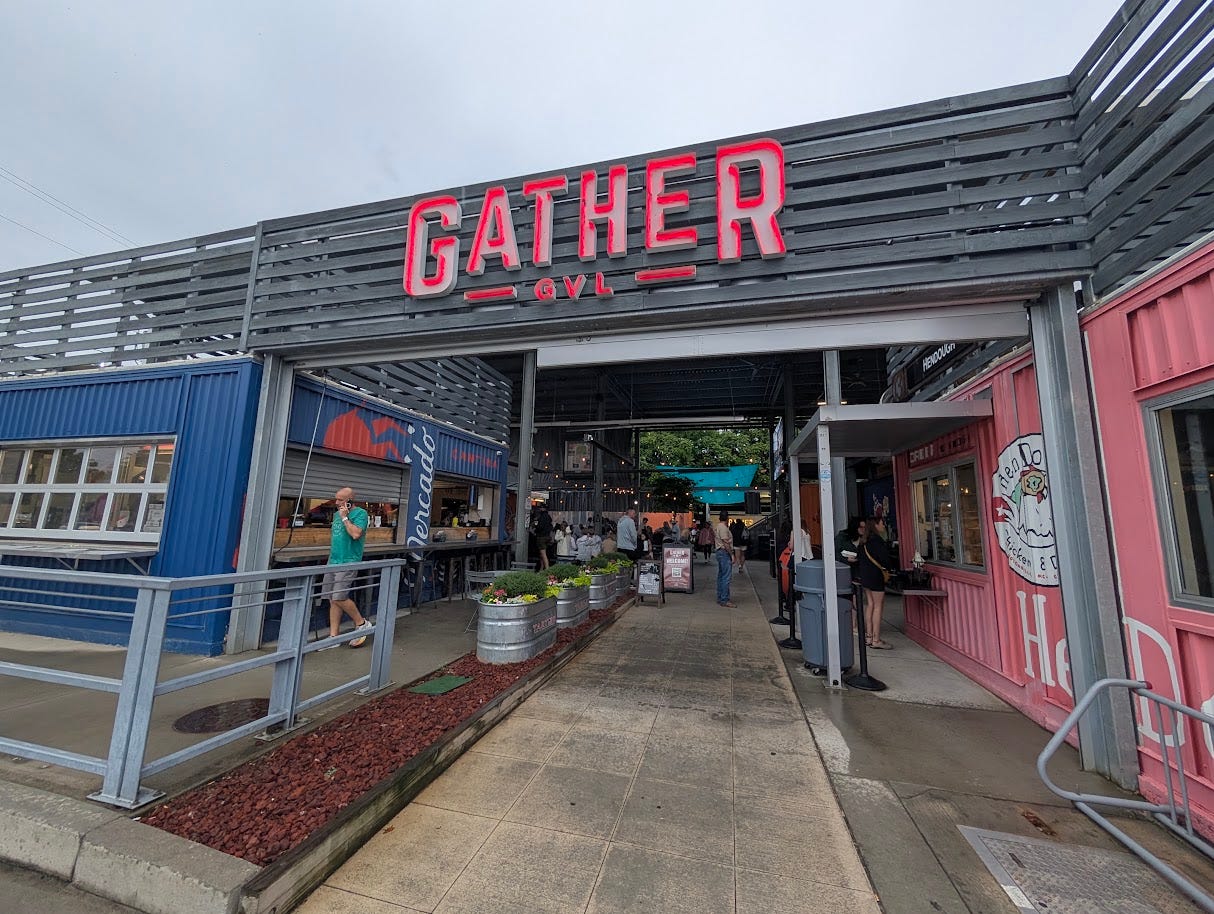
Nostalgia! A word and concept I thoroughly derided in an article a few months ago as being “actively harmful” because I felt it only leads to protectionism and stagnation. But as Norm Mcdonald once said, “a man grows” and thanks to some opponent processing from the always insightful Ein Sof: Infinite Reflections I realized that not all nostalgia is disordered.
In fact, I would go so far as to say that nostalgia can be good if properly moderated by a desire to continually move forward. Nostalgia has a way of reminding us of not just “the good times” but also of giving us a map to rightly returning to the good times.
If I am remembering correctly, Martin Shaw has remarked how myth and oral storytelling is similar to tracking in the woods, you don’t start at the origin but work your way from a point to it.
I really like this framing, and I think if we accept that we are storied creatures, we can find our way back to better ways of doing things by mining our nostalgia for those paths to greatness.
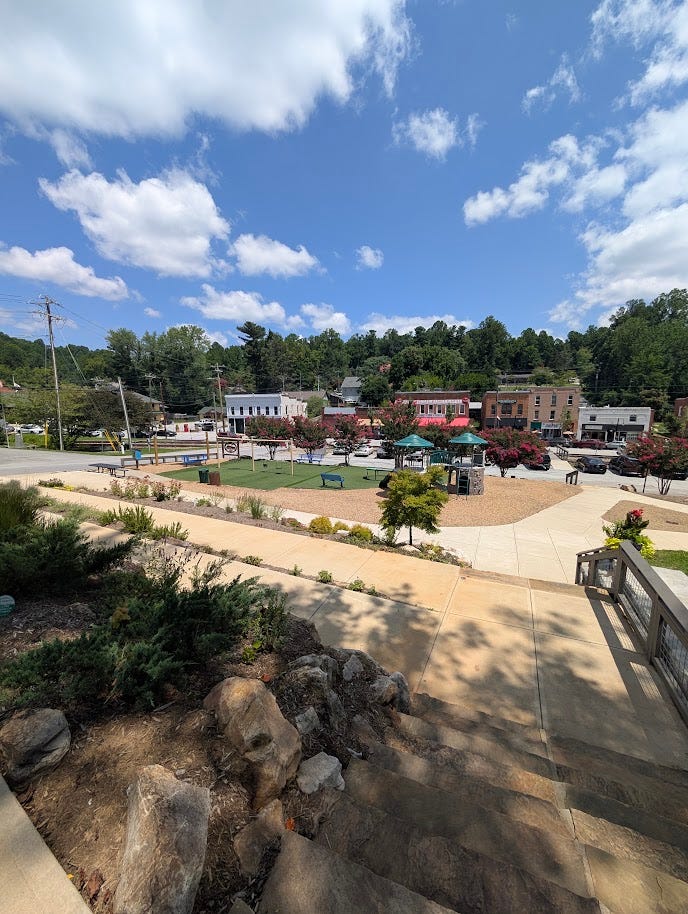
While I still believe that nostalgia can easily grip a population and have them revert to a false sense of security, properly ordered nostalgia can create very beautiful places when ordered by truth!
The truth of the great downtowns of the Southeast is that they were generally visited by people arriving on the iron horse (trains) and moving about by horses, walking, or by carriage until the invention of the automobile. Even with the invention of the auto, streetcars and horses often mixed side by side to create quite the picture.
The problem would be to say (in remembering the title of this essay), “we must return to X time period because this is when I think everything was right in the world” because that world no longer exists.
Once something is introduced into the world, it either impacts the world (cotton gin) or fizzles away (NFTs), but you cannot go on acting as if it no longer exists. This is why groups who try to resurrect prior times can never properly integrate or encourage everyone else to go back in time with them.
The choosing of a time period to return to is arbitrary and it often forces a sort of cognative dissonance in second and third generation members that leave in droves. To look for how to integrate new changes with old practices look no farther than the Orthodox Jews!
While movements such as Reform Judaism tried to integrate the world into Judaism, Orthodox Jews have created a wide variety of ways to integrate Jews into the world around them while maintaining their traditional ways of worship. I really love watching the Moses and Zippora videos as you can learn how Jewish thought and tradition has had to evolve to help integrate old practices into new ways of being human.
The goal is not to simply, “do things the way they have always been done or done in prior times” because that is impossible, but to integrate the good in things that come about and build a better world to inhabit with based on older wisdom.