
I consume a lot of media, honestly, too much media. I am reading articles and books, watching YouTube videos and shorts, and listening to podcasts and music. As I experience the firehose of hot takes and ideas, it is hard for some ideas to stand out over others.
One idea that really stuck out to me was Jordan Hall’s concept of “civium,” which he explored in detail on Matthew Wilkinson’s YouTube channel, mostly dedicated to church music and city architecture.
What stuck out to me was the idea that “a city cannot truly be beautiful,” which leads Jordan to expand on his ideas for human cohabitation that he calls “civium.” Instantly, I wanted to dive into writing a response to this idea with a defense of cities, but I realized it is more beneficial to explore the idea and build on it with how I see cities, towns, and the countryside developing in the near-ish future.
The Possibility of Intentional Living
Every other generation seems to develop some alt-cultures around intentional living, and some cultures have enduring models of this on their fringes (kibbutz and moshavs in Israel come to mind). In my anecdotal experience, I know people who are not just talking about living with their friends but actively building towards that reality by developing the skills and saving the money necessary to make it happen.
One of the major points of civium that I agree with is that people need to live with intentionality in their day-to-day lives. As cities and civilization have evolved, we have decreased our interaction with the things we need to survive and thrive. No longer are you buying groceries from the people who make them, the furniture from the people who craft them (or G-d forbid, making it yourself), or educating your kids in your cultural history yourself. We hand off all responsibility to people whose names we do not know and stories we do not share.
You do not have to become a hippie and form a commune in the mountains of California to live with intention. It starts with becoming a local and repairing the damage done by consumer culture.

Despite a lack of intentional living by the average person, the desire to be a local and live in a community that functions like one is still lying dormant in the everyman. Hurricane Helene demonstrated the strength of the community. Although the response resources we outsourced to the government were slow and ineffective, the community came together and realized they had really nice neighbors who were willing to help out in times of great need.
We don’t have to wait for natural disasters to drink coffee and break bread with our neighbors, and we don’t have to be cut off from civilization to think about becoming slightly more self-sufficient when it comes to our foodstuffs.
We also have to remember that the internet, while great, is not a replacement for in-person community. Generation X has produced a lot of media suggesting that technology replacing reality is inevitable, for better or worse. I disagree.
Sidelining Technology for Humanity
If you were a techno optimist like I was in the 2010s, every week brought a new technology that promised to change how we interacted with each other and send us to the stars. Skunk Works was working on nuclear fusion, graphene was going to build towers of Babel to space, and alternate reality glasses were going to become ubiquitous.
Fast forward 15 years, and none of that happened. While there have been some cool things that have happened (SpaceX, drones, and crystal clear online video calling), the role technology plays in our society acts more as a negative than a positive. We have more social media platforms than ever, but people report being lonely and depressed at increasingly awful levels.
Platforms such as Discord, Reddit, and Fortnite (yes - the video game) can bring people together to talk/discuss a central topic and form real connections, but these connections disappear once the cell tower slides off the mountain. When the internet goes down or the servers are slow, you see through the 1s and 0s and realize that you cannot rely on the digital space as your primary network because we are organic, spiritual beings.
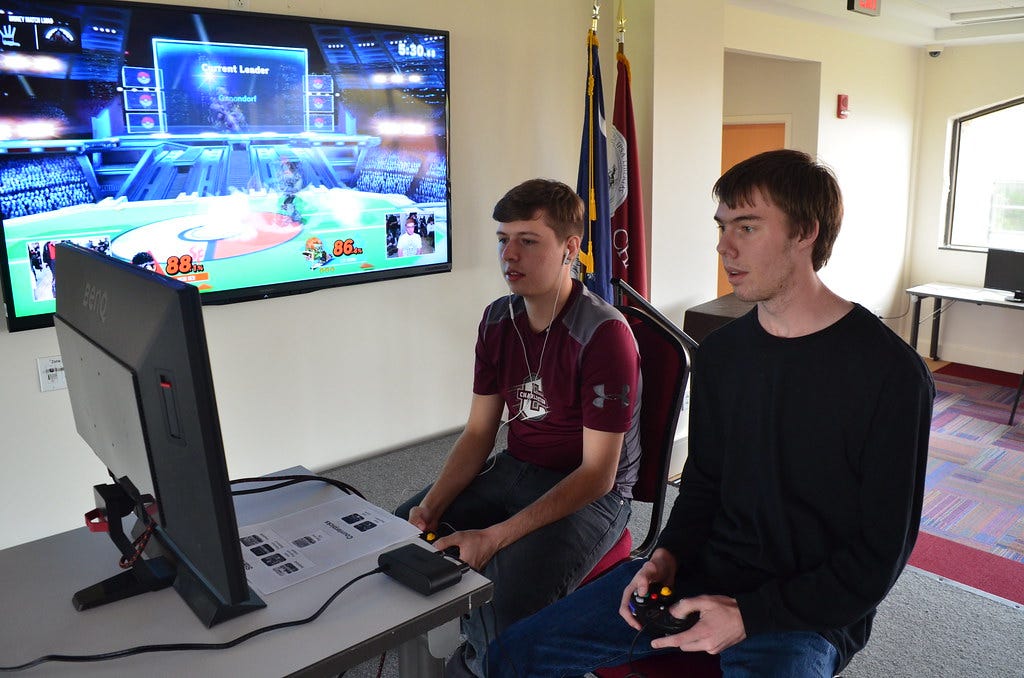
At best, I think technology will function by bringing people together (as it has in the past) in physical space for communion. Even in the most social online spaces like professional video games (esports) there is something intrinsically special and unique about meeting people face to face at local area network (LAN) tournaments that will bring people often from around the globe to attend.
One example for me would be Facebook groups. As I’ve mentioned before, I’ve recently gotten into mountain biking and without Facebook Groups or mapping application Trailforks, I probably would have missed out on the majority of the trails in my area.
Via Facebook Groups, it is possible to ride with former strangers who become friends and share a communal experience we otherwise might not be able to with our busy lives. When technology is at its best, it brings people together in person to do things without it (or with it in the background).
Imagining the Future of Community
While I might not be raging against the machine like Paul Kingsnorth, I am very skeptical that, as communication technology is refined, we will not need to be in close proximity to achieve benefits.
There have been several recent failures in augmented reality (AR), virtual reality (VR), and Web 3, which have fallen extremely short of their lofty goals of ushering in a paradigm shift in connectivity. Despite a decentralization of talent post-COVID, mega regions and talent hubs like Silicon Valley and NYC remain the places to be, leading to despondency and despair among many young would-be tech entrepreneurs in up-and-coming cities such as Austin, Nashville, and Charlotte.
Incredible things can certainly be built across distances, but nothing can replace the magic of being in communion with a culture of innovation and creativity to build.
Regardless, cities are not just hubs of innovation and business; they are also places where we live, experience the arts and culture, and hopefully worship as well. While Charlotte, NC, or Greenville, SC might not be the next Silicon Valley, they are amazing in their own right.
As society becomes polarized at a national level, it has the opportunity to be brought closer together at the city level. We see this with people who might not love America the country, but they will proudly rep their city/county/state. The middle cities/regions of America are small enough where you can reasonably be involved in local politics without feeling like a cog in the machine, but are big enough to offer amenities of the larger locales (or access to them).
Eliade discussed the seemingly baked-in human fundamental dynamic between the urban and the rural. This seems connected to the Tower of Babel and the City of God in some way I only intuit.
Either way, deep in my heart I long to once again live a rural life.