
There is a fun irony about our perception of being a “free thinker.” Plenty of thinkpieces have been written on who protects and cherishes free speech, but few people actually delineate what they think it means to think for yourself.
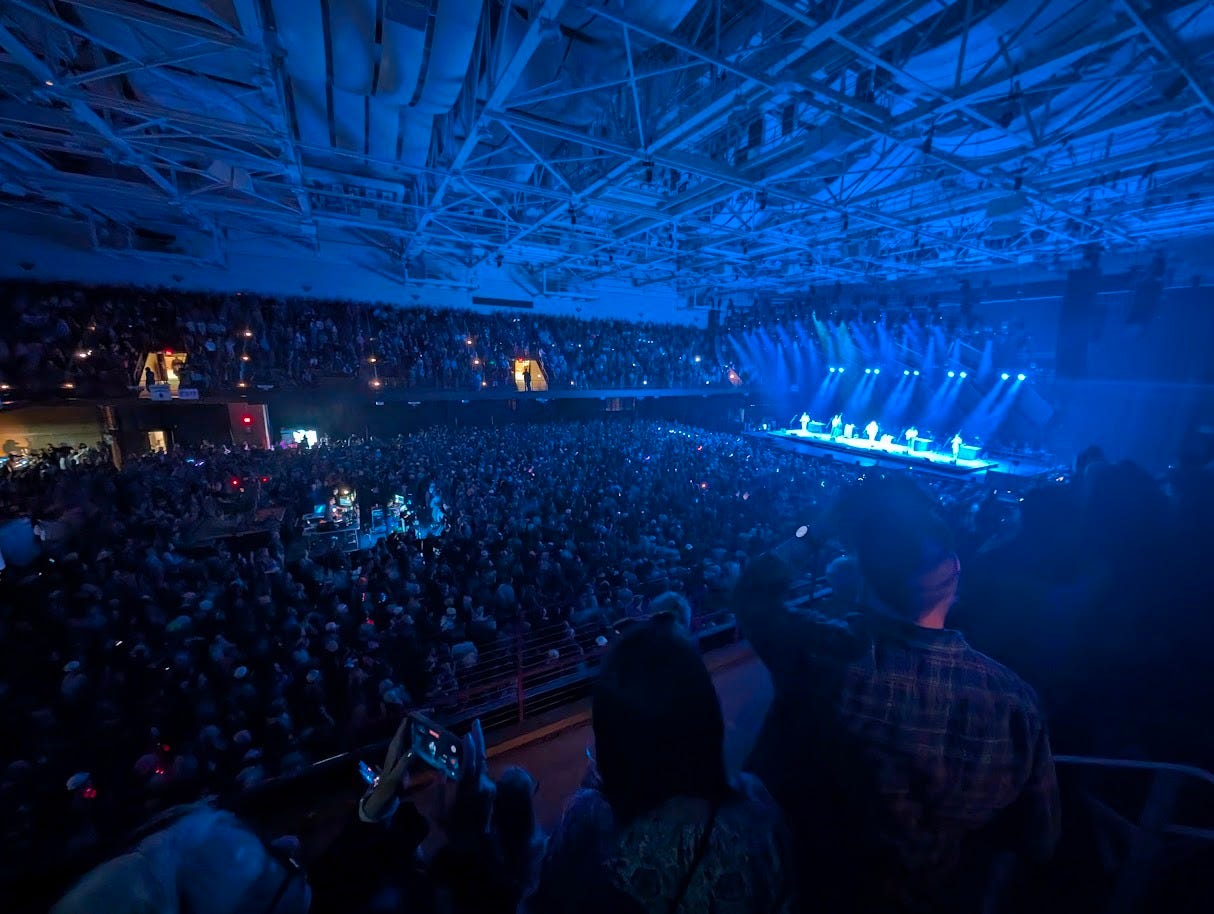
Because in all honesty, does anyone really think for themselves? This past weekend, I took Máder up to Asheville, NC, for the afternoon/evening to do some bebopping downtown and see the legendary Billy Strings play to his 19th consecutive sold-out crowd in the city.
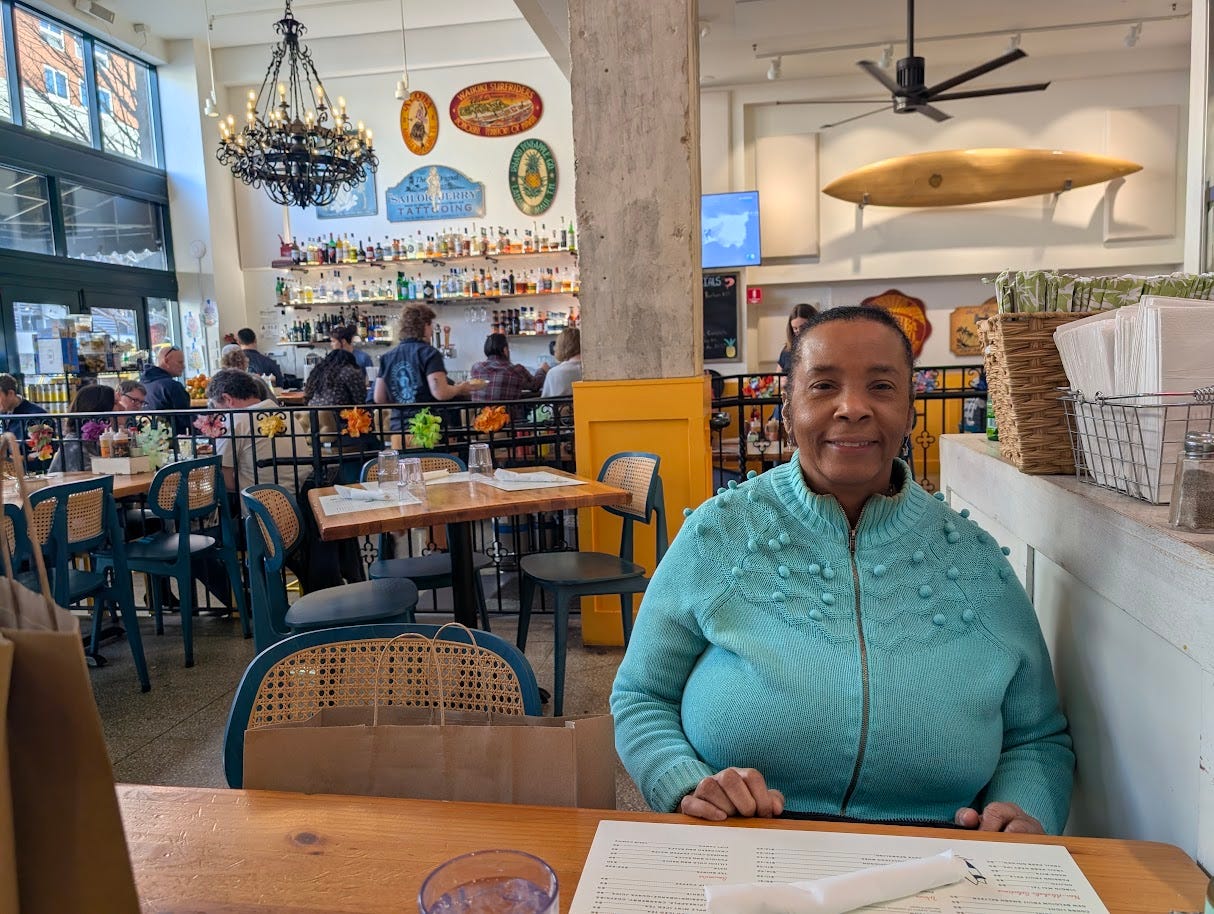
Mom, a veteran of NYC in the 80s and Kingston, Jamaica, prior to that, has little fear when it comes to cities, but many on the right are downright terrified of the city of Asheville. The Facebook right-wing groupthink would have you view the city as a bombed-out hellhole filled with the roaming dead requiring a bulletproof Cybertruck, tactical gear, and a shotgun to navigate safely.
While we did see a homeless person after the concert sleeping inside a building, we generally had a very positive experience that would not reinforce that stereotype for us.
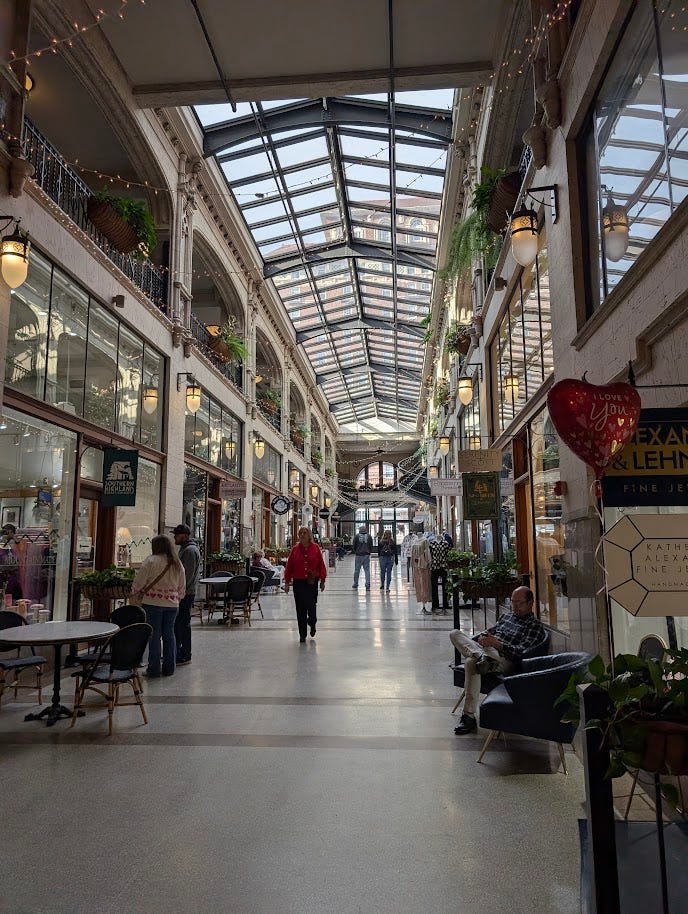
Asheville certainly has its issues, do not get me wrong, but often the arguments made by people who only watch/read the news and never actually go somewhere ring hollow compared to actual experience.
That said, after the concert, my phone/social media decided that I needed to join every Billy Strings fan group known to man. While I declined to, I found that the reaction to his rocketing stardom is quite controversial.
At the concert, you could see several different types of fans boiled into one, happy soup. The out-of-town groupie that travelled without a ticket, hoping to snag a last-minute sale, the far too few locals who grew up fans of bluegrass/NC style Appalachian music, the Grateful Dead (deadhead) fans who see Billy as a reincarnation of either Jerry Garcia or Bob Weir, and the wealthier fans who just appreciate the talent.
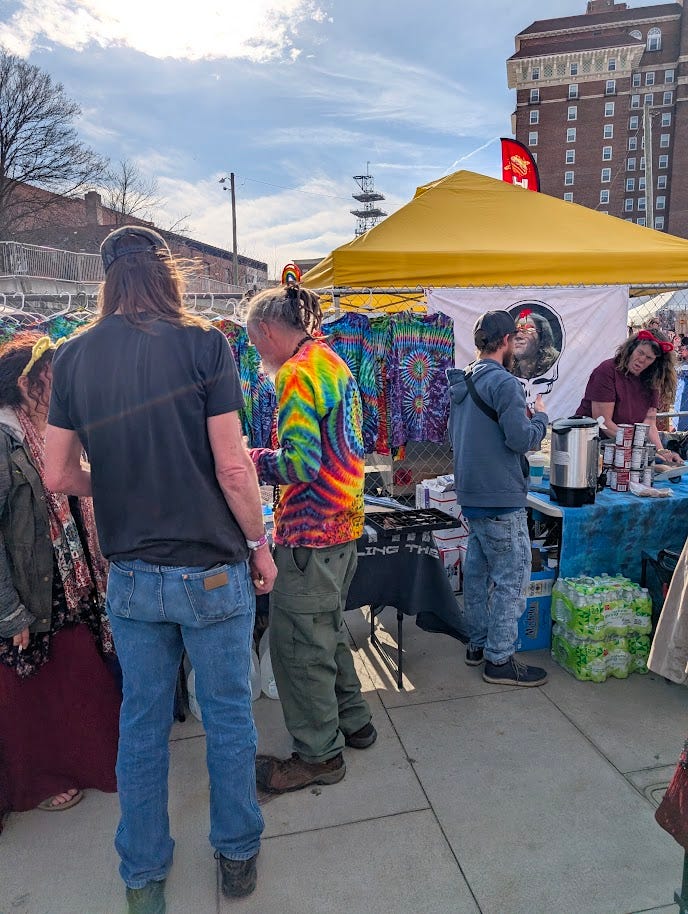
This clash of cultures can result in online groups hating on each other, hurling memes and complaints at one another with vicious ferocity. Despite the online chatter, the group of misfits in person were generally quite friendly to us and each other. The fans were everywhere in Asheville’s walkable downtown, patronizing restaurants and commercial markets, busking with guitars and fiddles, and waiting all day outside the venue hoping to be at the front row of the general admission on the venue’s floor.
You can argue that the internet is just not real life, but real-life people talk on the internet. I would argue that it is easier to peer pressure people online into ideas when they are lacking in firsthand information to refute, and first impressions are quite sticky.
Why does any of this matter? Well, I think it is important when we discuss narratives like “Are cities safe?” or “Can hippies add to the productive economy?” that we do our best to do so in a sober way (unlike the people at said concert - ha!).
Good faith discussions around important topics are increasingly rare outside of long-form podcasts, and I think it is important that we do our best to not poison the well as best as we can!
Quick Sidenote About Asheville
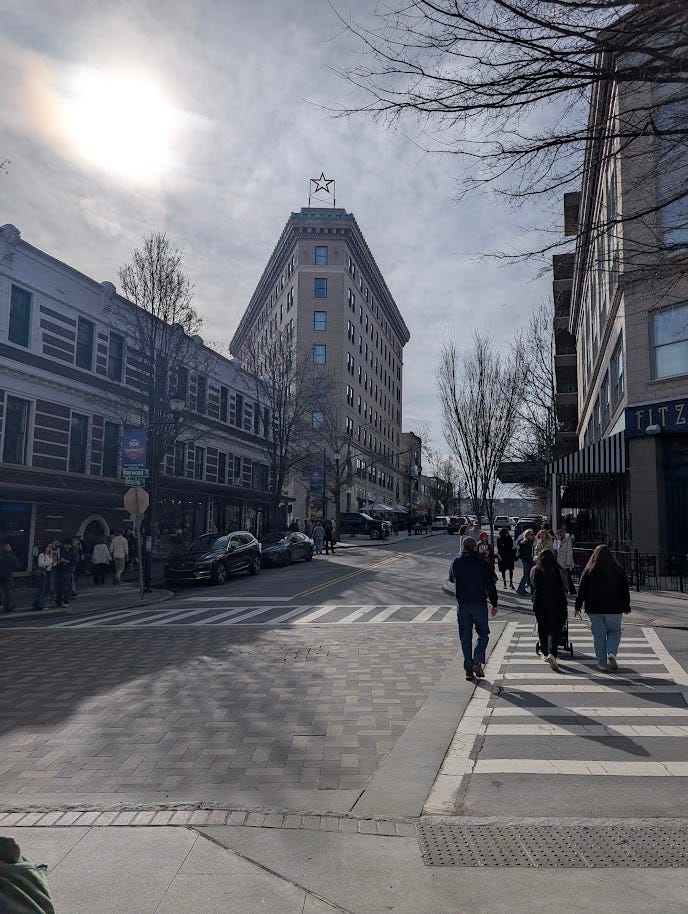
Sometimes referred to as the “capital of Appalachia,” Asheville has a rich architectural history with some truly stunning buildings. While that history has largely been preserved, unfortunately, the city seems to be caught in a tourist trap.
Since the city has long been a haven of tourism, it can rely on the steady income to support a diverse array of restaurants, nightclubs, and activities/attractions like whitewater rafting on the French Broad River or the Biltmore.
Unfortunately, this means that there is a semi-permanent working underclass that has an economy designed against upward mobility and purely on extraction. This is something I covered in my piece on pilgrim vs tourist.
How to Be a Pilgrim and Not a Tourist

The past two weekends, I’ve been checking off stadiums from my sports bucket list, and I have realized that sporting events might be the most obvious ways we can learn to move from being tourists to being pilgrims.
Asheville and the area have industry, and there is a lot of potential to see a downtown that is truly thriving with both out-of-towners and locals who can create new iconic buildings and songs instead of barely holding on to what is left of a thriving world.
There is a project to restore passenger rail service with a new station in the River Arts District, which would assuredly bring plenty of tourists (especially during fall, as the train route runs through scenic forests), but would provide some much-needed connectivity that could be the catalyst for growth.
The Conservative critiques against Asheville (filled with transplant yuppies, fiscally irresponsible, and too soft on crime) are all rooted in reality, but for the city to truly change it will have to shed some of its “hippie weird” charm to become something besides a mausoleum to gawk at.
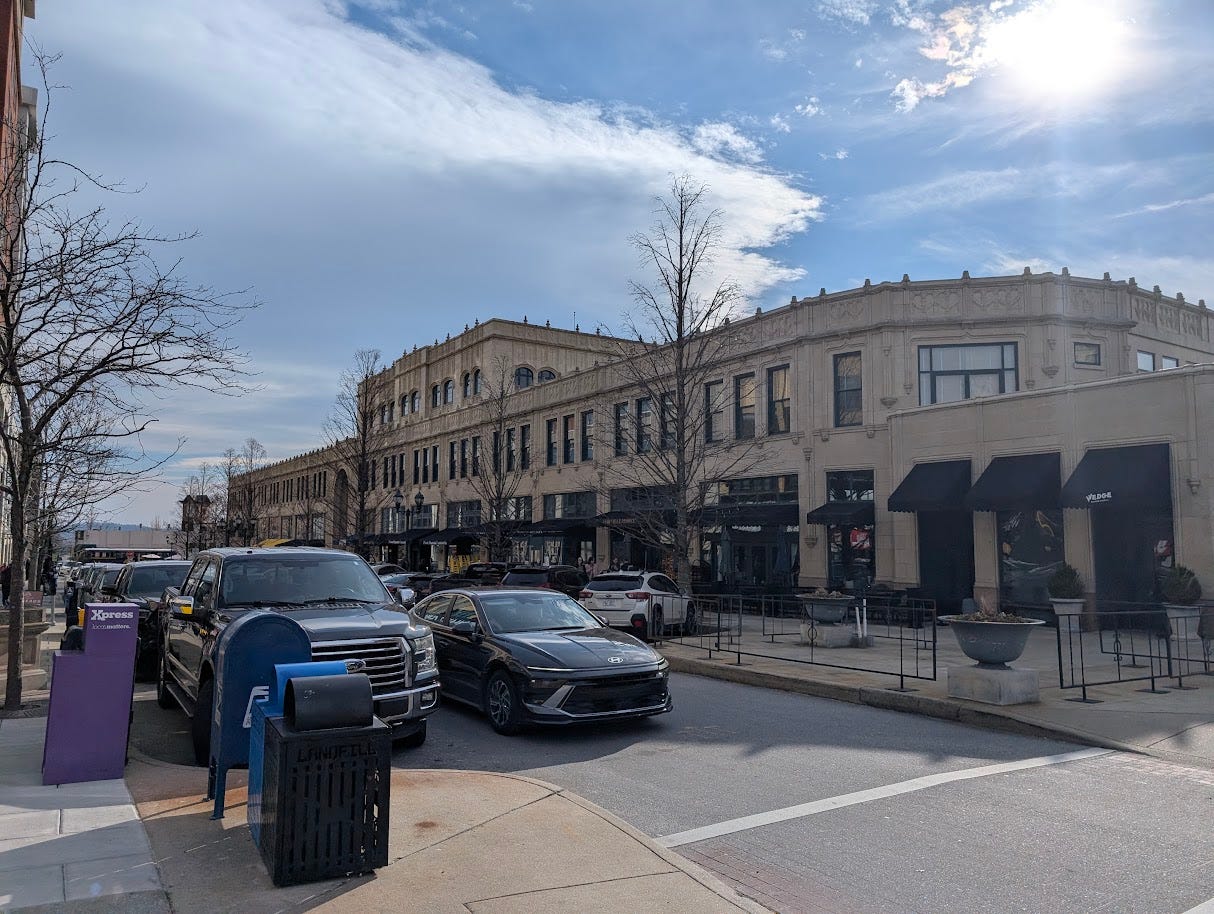
I love your Substack because of your hopeful optimism. Hopefully you’ve got a road trip planned this summer because we need more city reports.
I’m also requesting a town / village report. Something very small and not exciting - what can be found there?
// A faithful Reader of The Zillenial Times
I wish I could have got to see Asheville when I was there! But Hendersonville and surrounding area took my breath away as it was, I really hope I get to go back and take in more of such a beautiful place. Loved the photos!